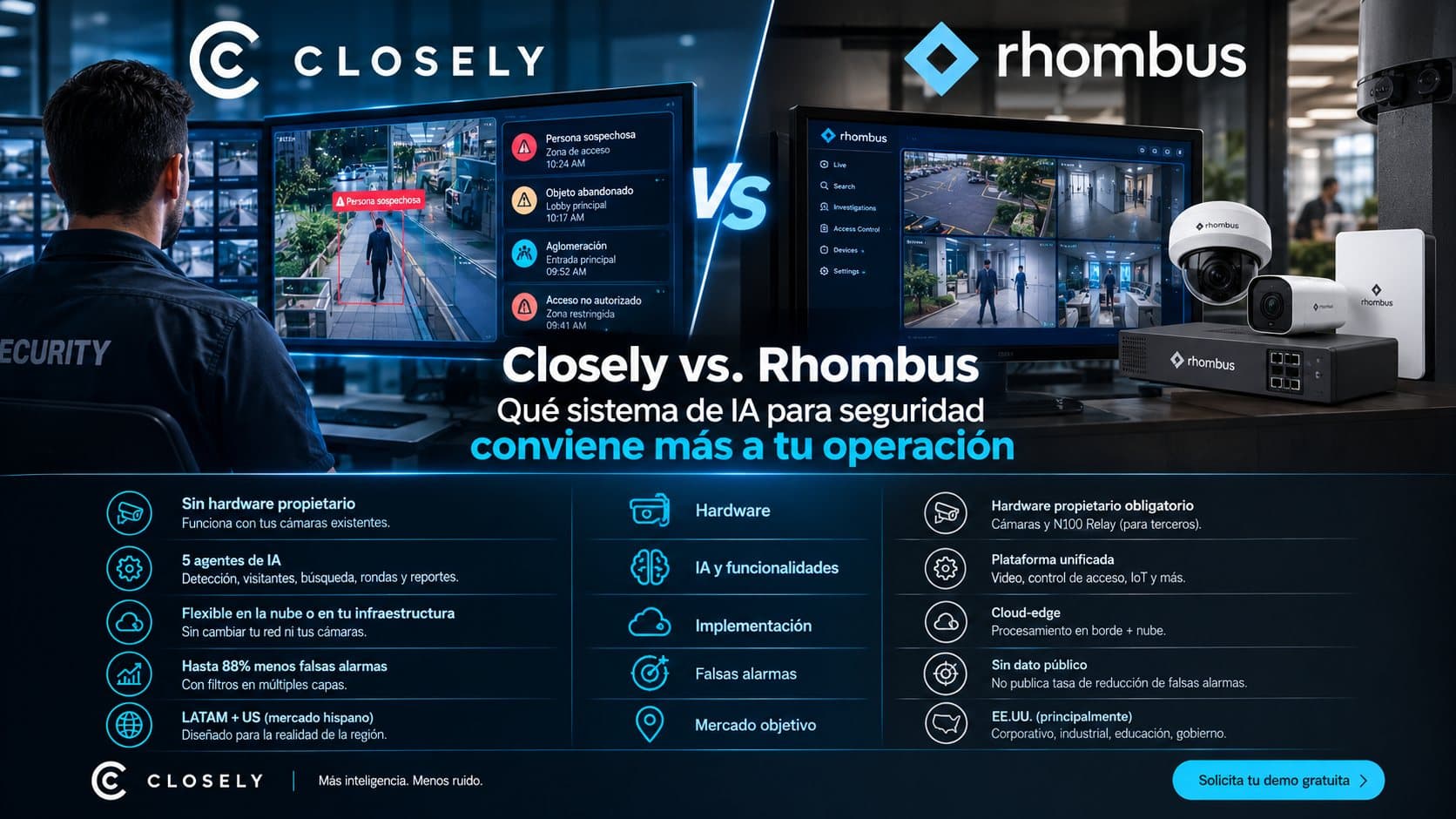
Closely vs. Rhombus: Which AI Security System Is Right for Your Operation
Closely vs. Rhombus: proprietary hardware versus AI on the cameras you already have. Pricing, licenses, features, and when each one makes sense.
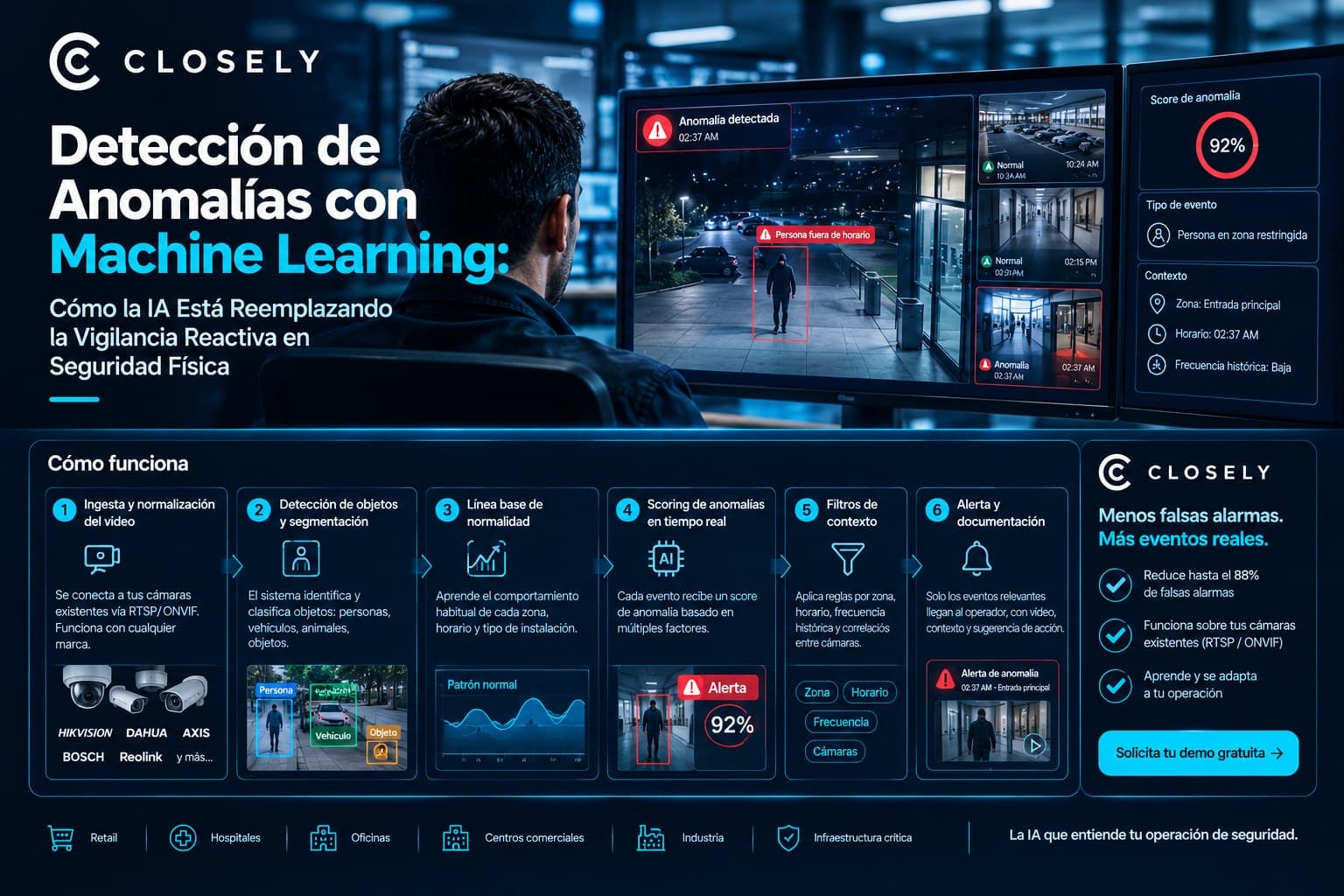
Anomaly Detection with Machine Learning: How AI Is Replacing Reactive Surveillance in Physical Security
How machine learning anomaly detection works in video surveillance, why traditional systems fail, and how to evaluate one that actually works.

The Best AI for Security Cameras in 2027: Complete Comparison
AI for security cameras in 2027 compared: Closely, Verkada, Genetec, Milestone, Omnilert, Rhombus, and Coram AI. Which fits LATAM and the U.S.
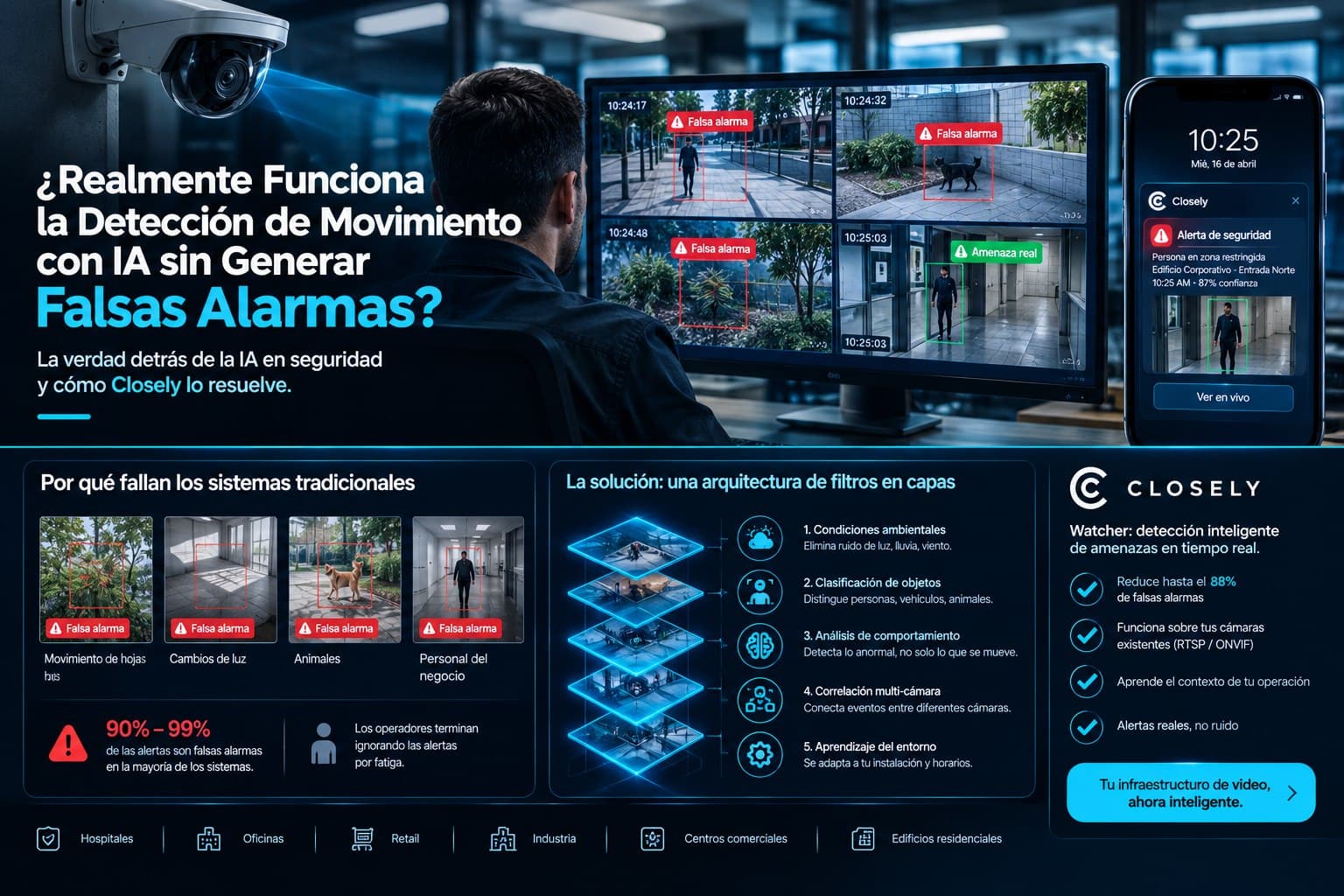
Does AI Motion Detection Really Work Without Generating False Alarms?
Why most AI motion detection systems generate false alarms, and how a layered filtering architecture solves the problem.
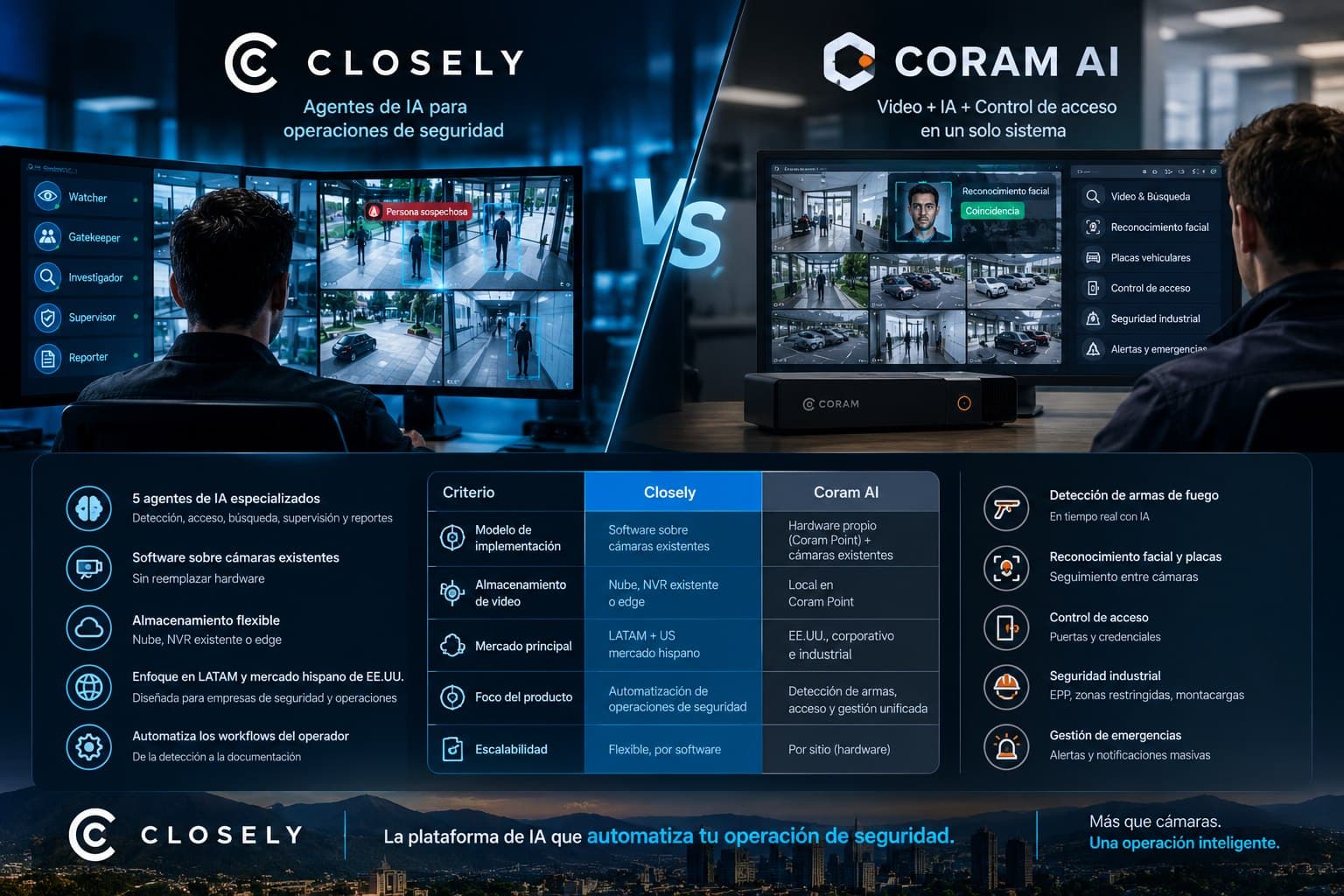
Closely vs. Coram AI: Comparing Artificial Intelligence Platforms for Physical Security
Closely vs. Coram AI: deployment models, features, markets, pricing, and when to use each AI security platform.

Closely vs. Omnilert: Which AI Security Platform Does Your Operation Need
Closely vs. Omnilert: what each platform detects, which market it's built for, how they differ, and when to use each one.
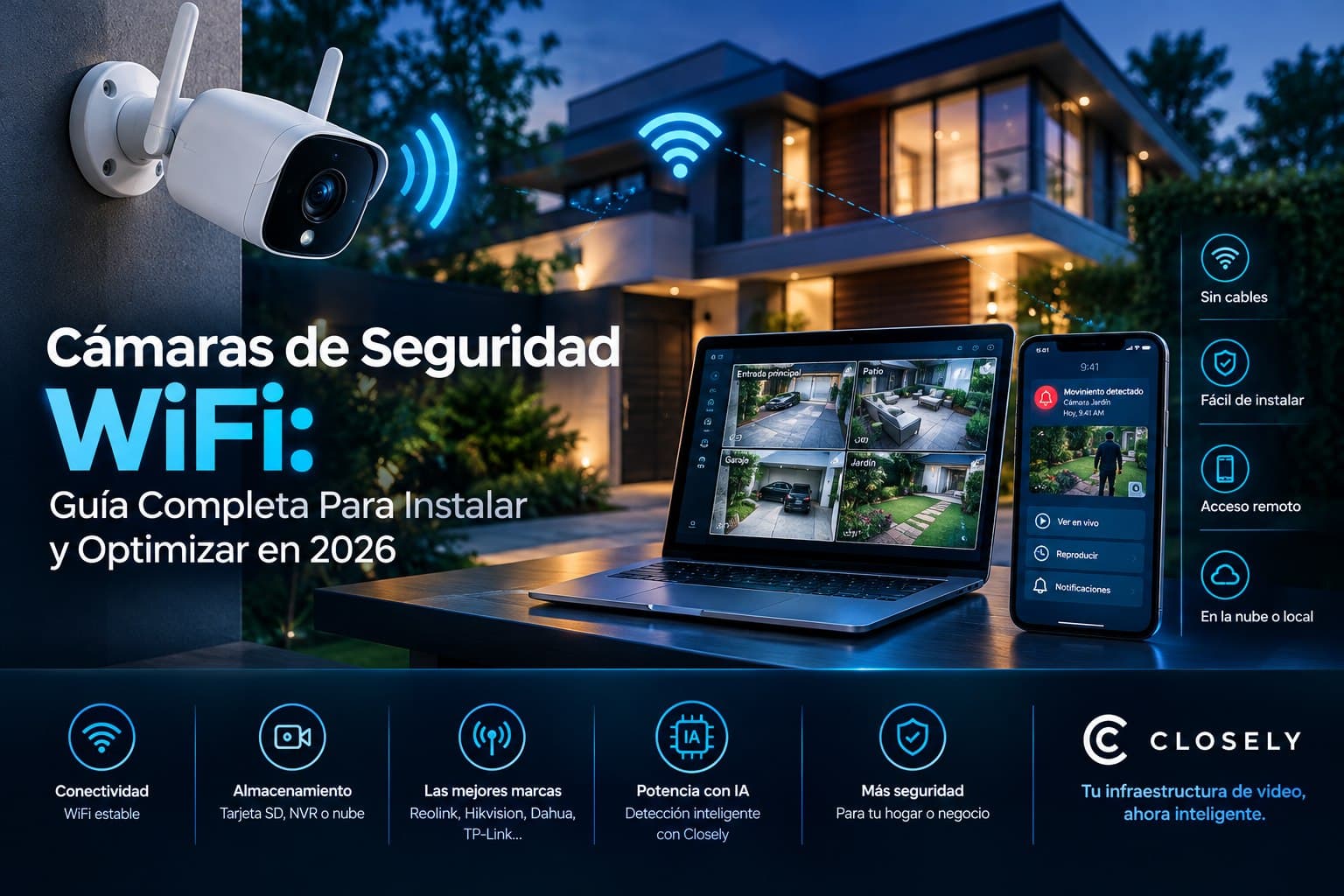
WiFi Security Cameras: Complete Guide to Choosing, Installing and Getting the Most Out of Them
WiFi security cameras: how they work, signal, storage, top brands, when to use cable instead, and how to add artificial intelligence on top.
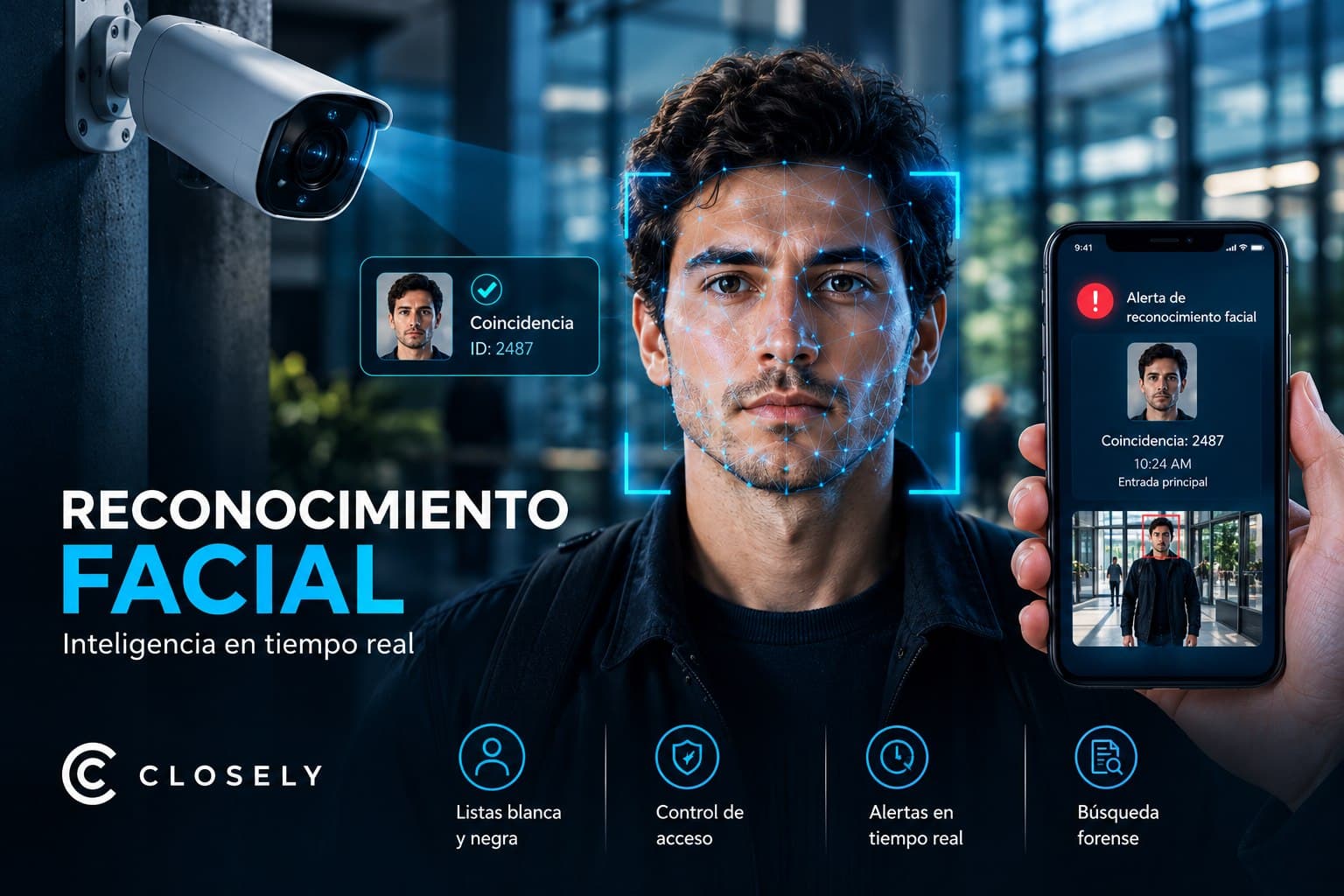
Facial Recognition on Security Cameras in 2026: How It Works, What It's For, and What to Know Before Implementing It
Facial recognition on security cameras: how it works, watchlists and allowlists, the law in Colombia and the U.S., and deploying it on existing cameras.
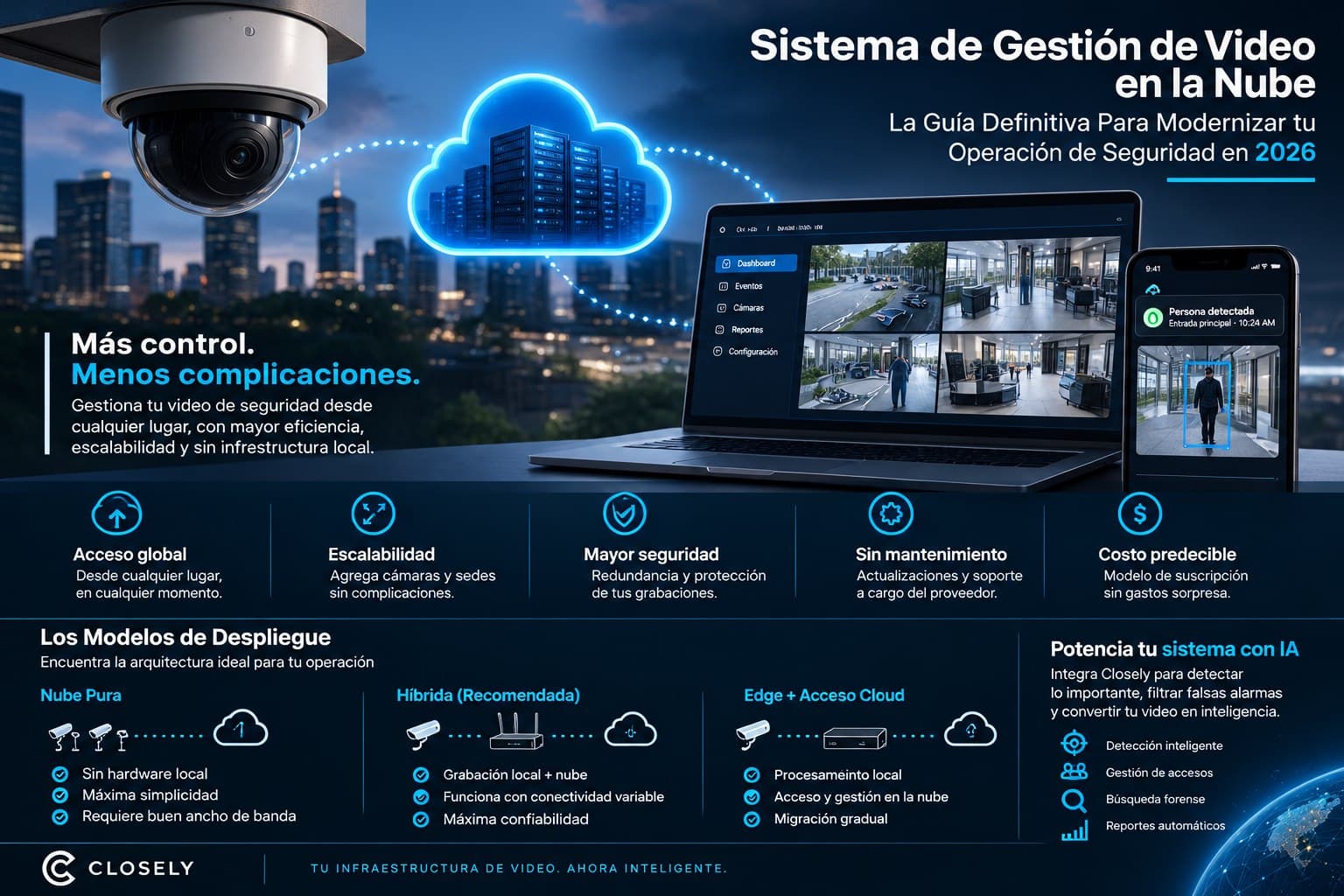
Cloud Video Management Systems: The Definitive Guide to Modernizing Your Security Operation in 2026
Cloud VMS: how it works, deployment models, advantages, limitations, leading vendors, and how to add AI on top of your current infrastructure.
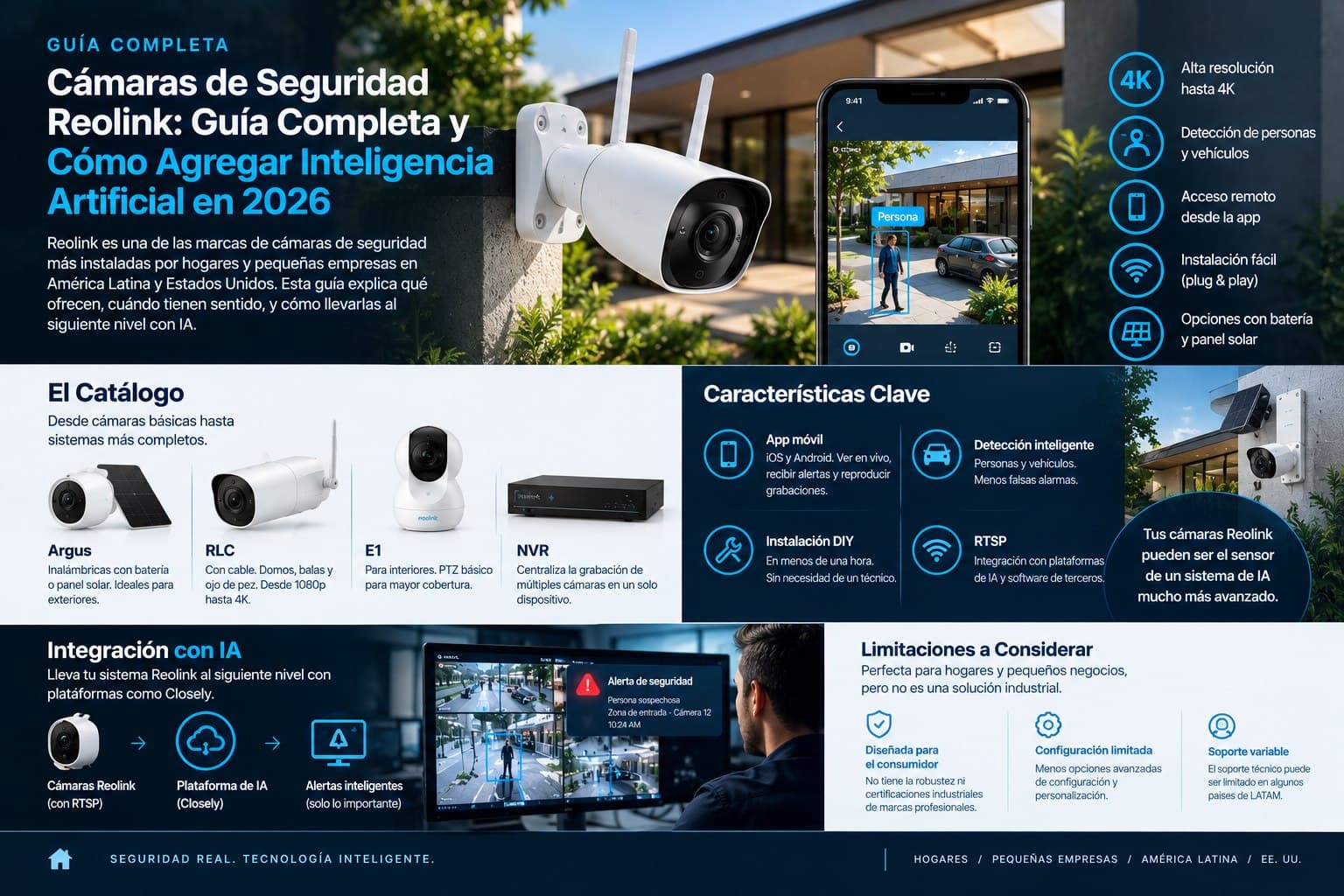
Reolink Security Cameras: Complete Guide and How to Add Artificial Intelligence in 2026
Reolink cameras: what they offer, their limitations, when they make sense, and how to add artificial intelligence without replacing hardware.
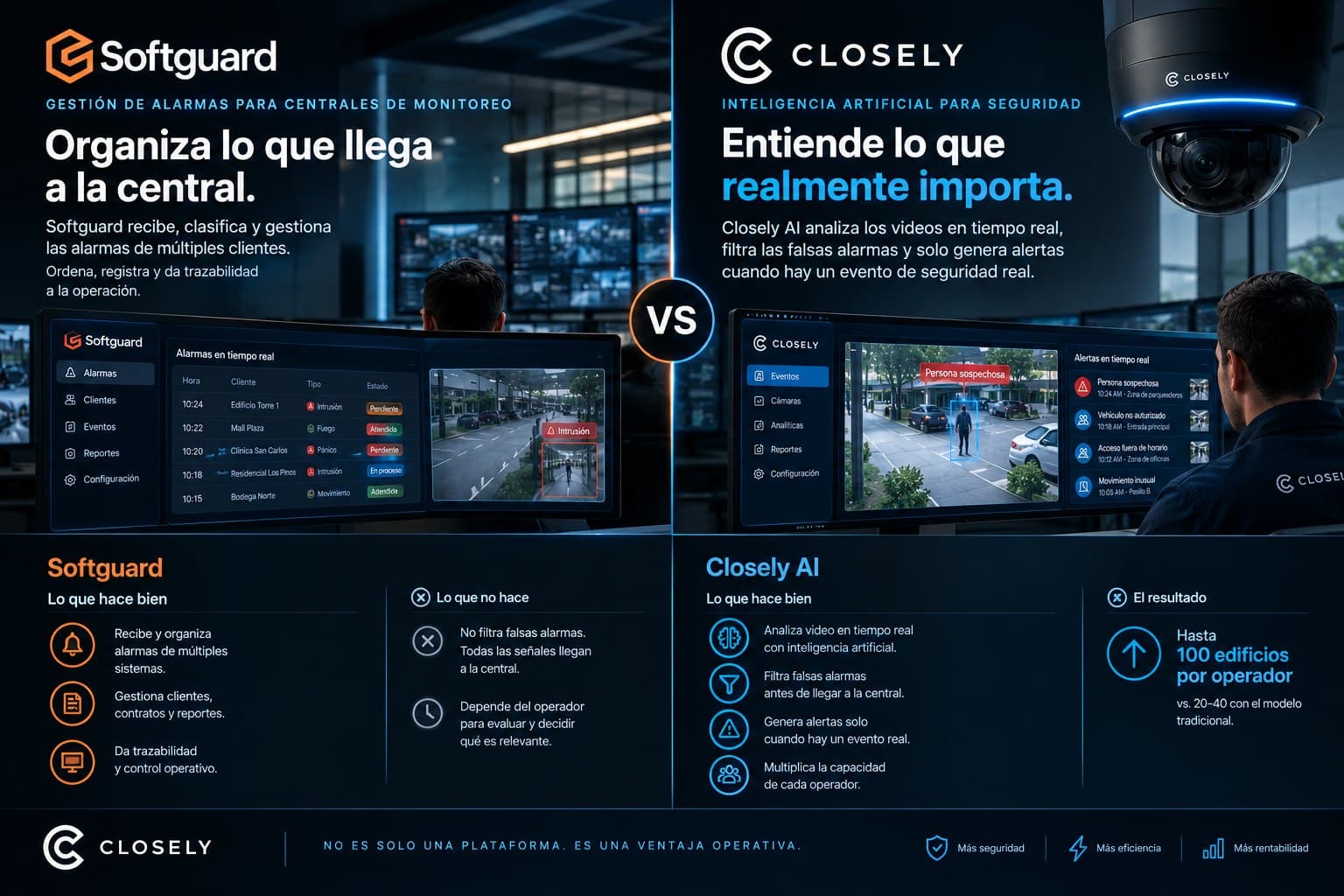
Closely AI vs. Softguard: The Difference Between Managing Alarms and Understanding Them
Softguard manages alarms. Closely AI filters them before they reach the operator: up to 88% fewer false alarms and 100 buildings per operator.

World Space Week 2026: "Rocket Revolution" and Why Space Technology Changed Security on Earth
World Space Week 2026, October 4-10: the Rocket Revolution theme, events in LATAM and the U.S., and how space tech connects to security.

Fisheye Lenses and Wide-Angle Cameras: Complete Guide for Video Surveillance in 2026
Fisheye cameras: how they work, what dewarping is, when to use them instead of fixed cameras, and how to integrate them with AI.
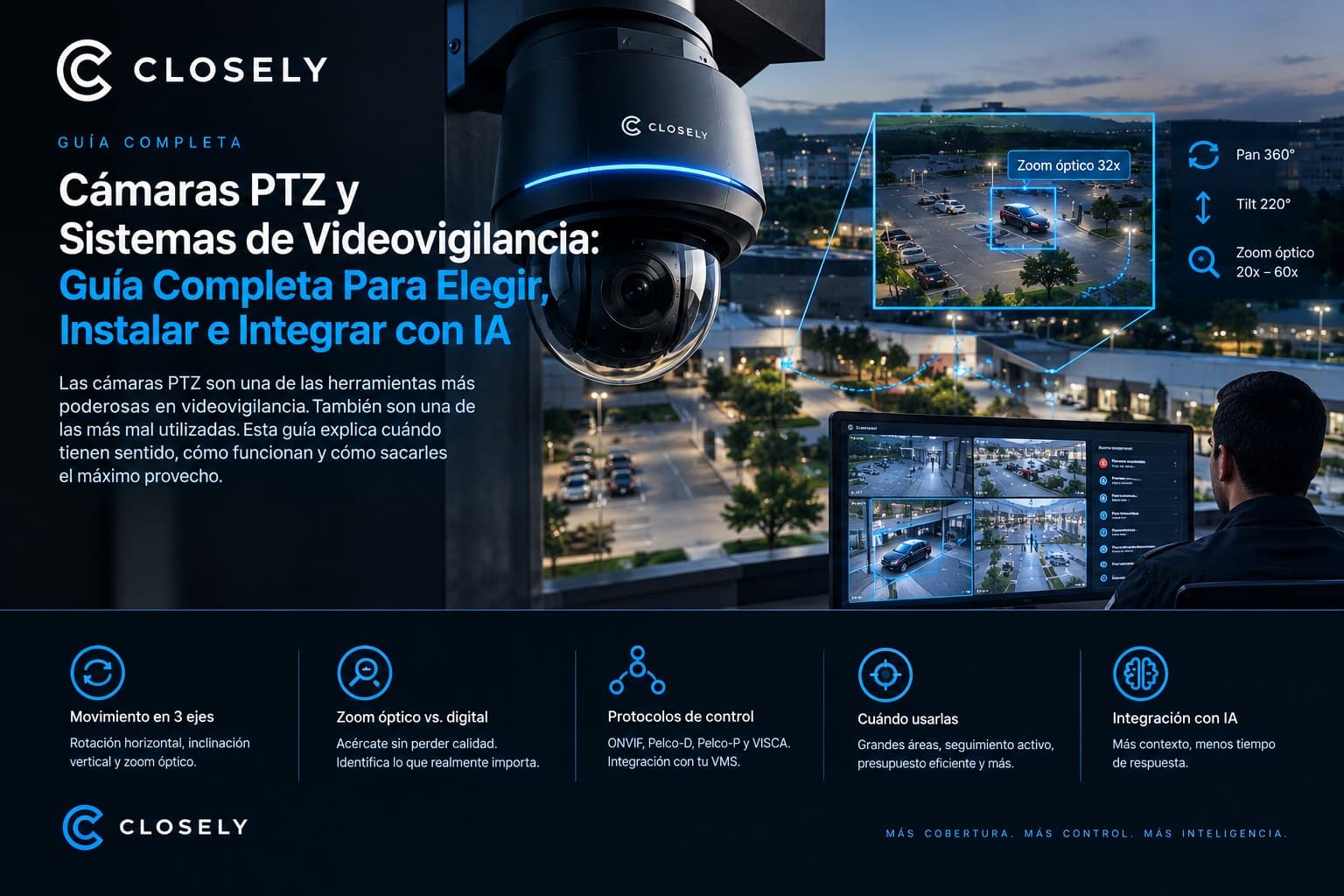
PTZ Cameras and Video Surveillance Systems: Complete Guide to Choosing, Installing and Integrating with AI
PTZ cameras: how they work, when to use them instead of fixed cameras, the leading manufacturers, and how to integrate them with AI.
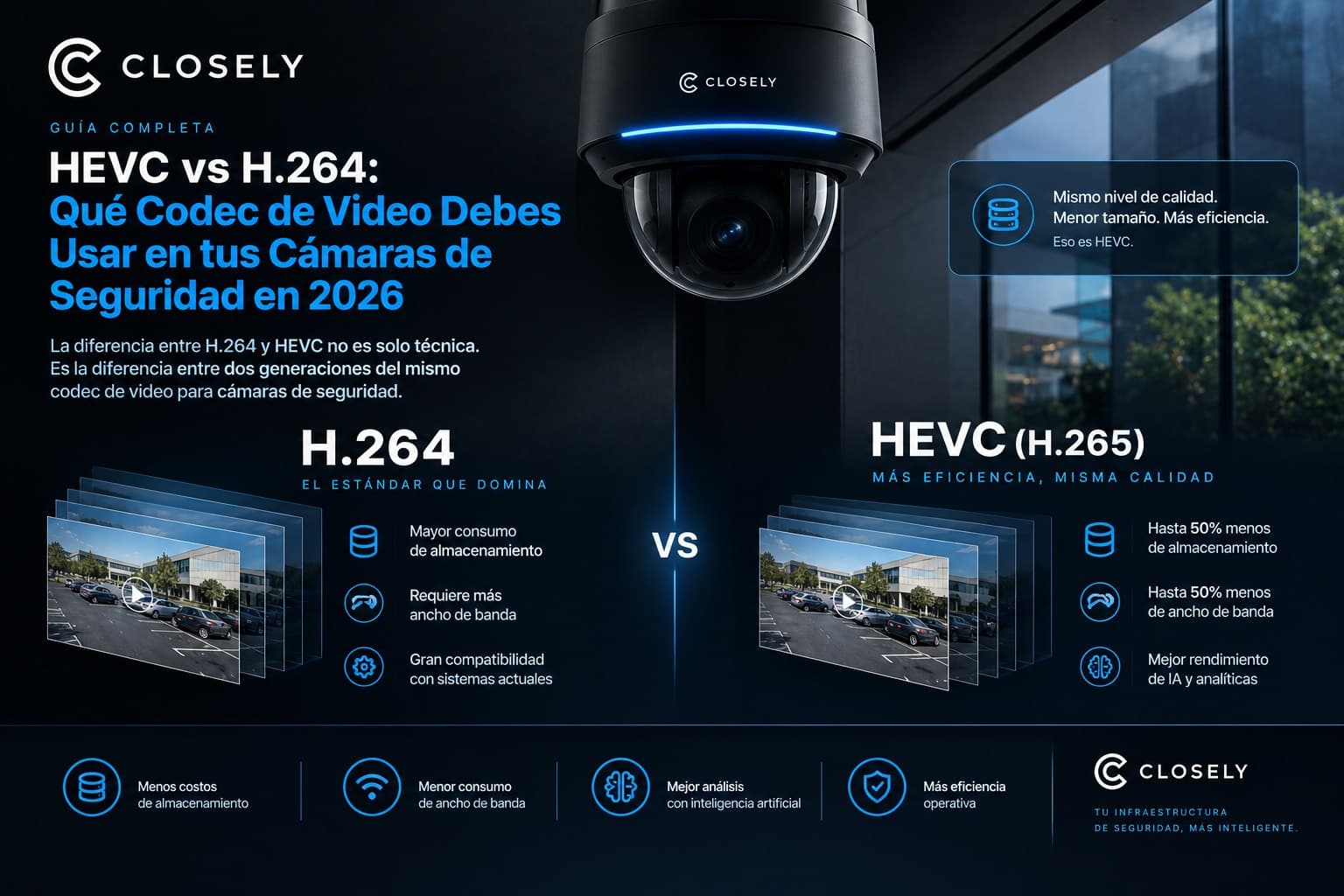
HEVC vs H.264: Which Video Codec Should You Use on Your Security Cameras in 2026
HEVC vs H.264 in video surveillance: how each codec affects storage, bandwidth and the accuracy of AI running on your cameras.
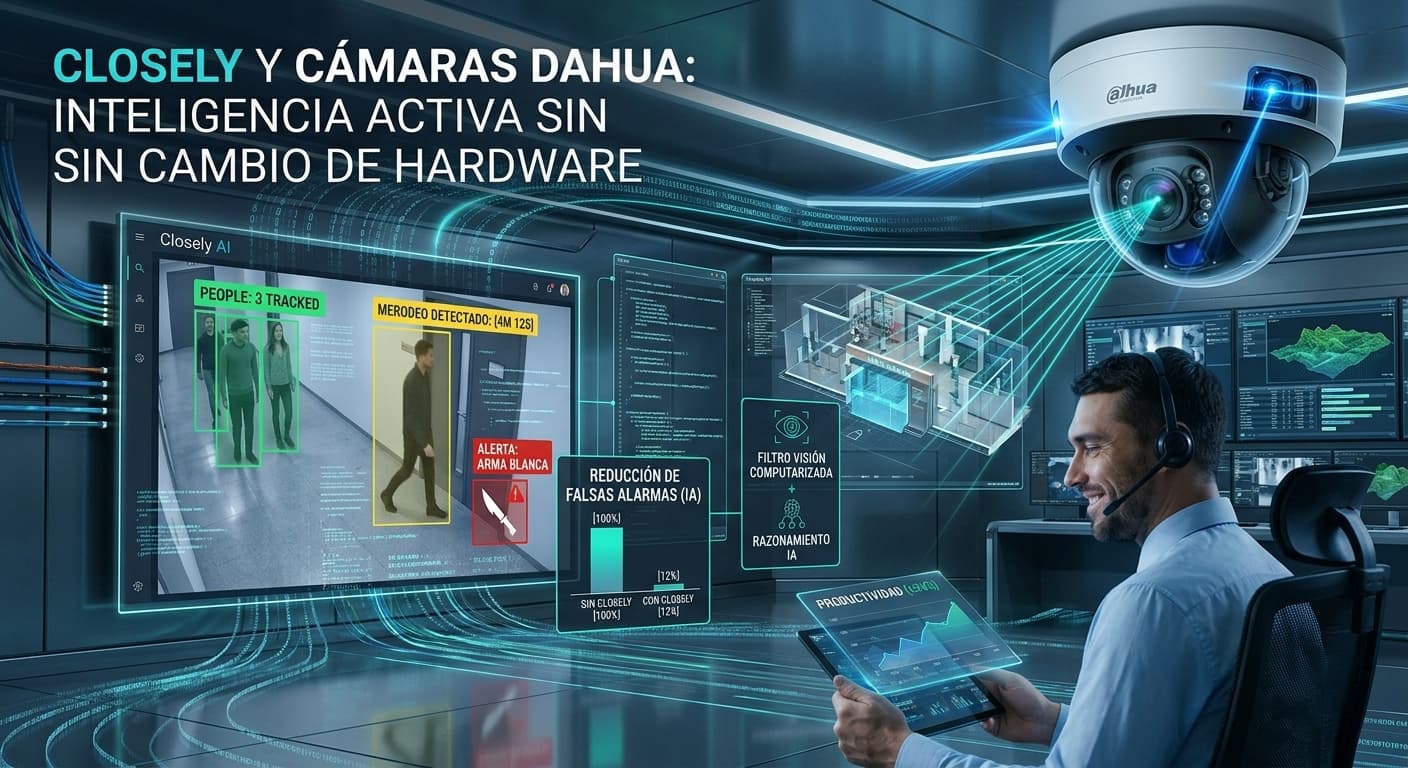
Closely and Dahua Cameras: How to Reduce False Alarms by 88% Without Replacing Hardware
AI on Dahua: 88% fewer false alarms, without replacing cameras, implementation in weeks.
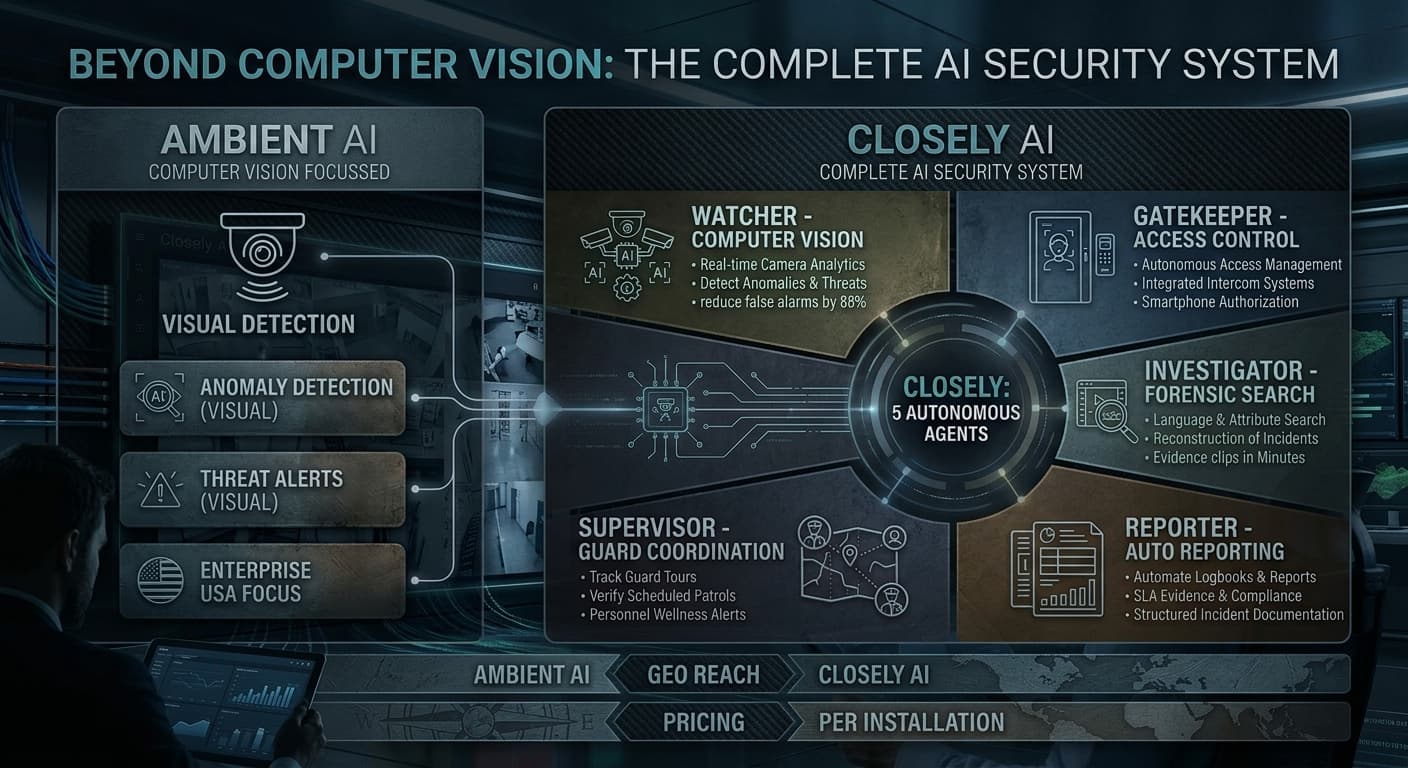
Closely vs. Ambient AI: The 5 Autonomous Agents That Change the Comparison
Ambient AI: computer vision. Closely: five agents (Watcher, Gatekeeper, Investigador, Supervisor, Reporter). Free 2-week demo.
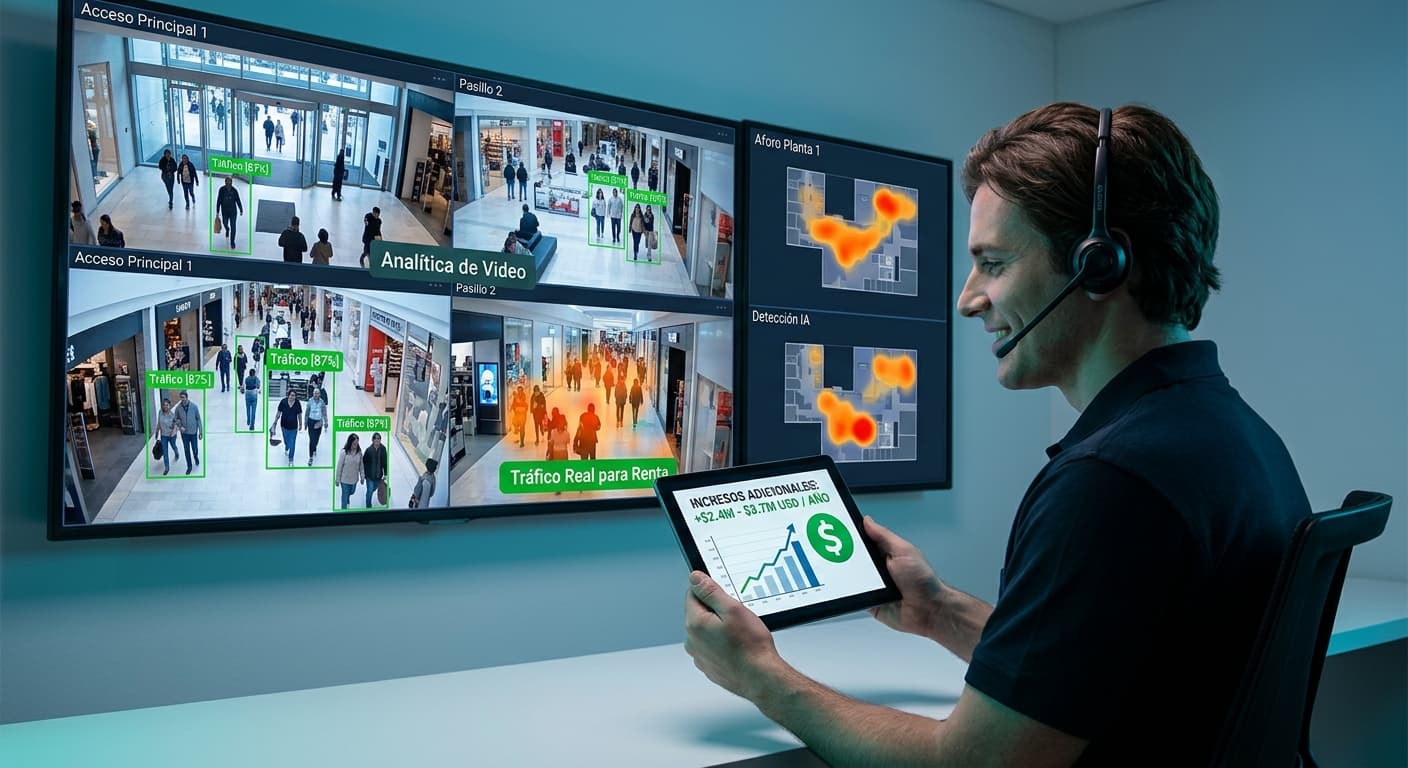
AI for Shopping Centers: When Security Cameras Start Making Money
AI converts existing cameras into 20-38% security cost reduction and up to USD 3.7M annual operational value.
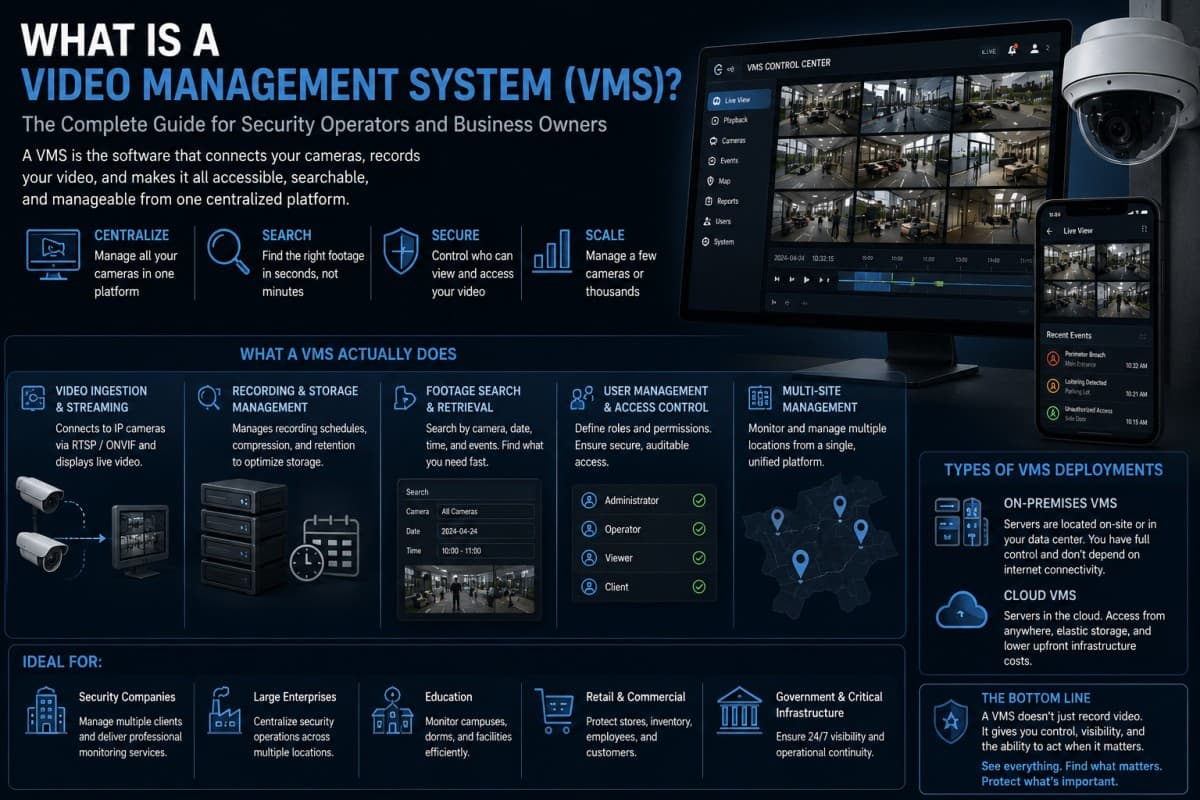
What Is a Video Management System (VMS)? The Complete Guide for Security Operators
A VMS is the software that connects your cameras, organizes footage, and makes monitoring practical at scale. Here is what it does, what it does not do, and how it fits into a modern security operation.
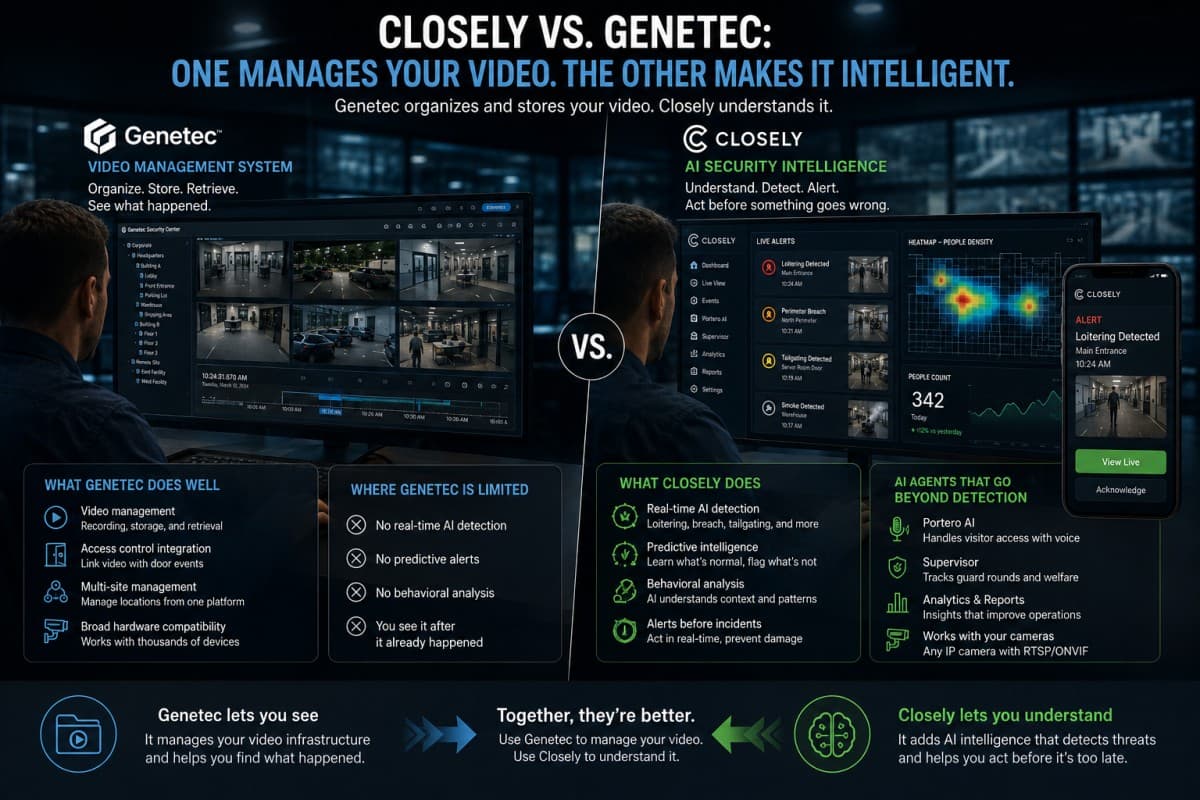
Closely vs. Genetec: One Manages Your Video. The Other Makes It Intelligent.
Genetec organizes and stores your video. Closely understands it in real time. Here is why that distinction matters for your security operation.
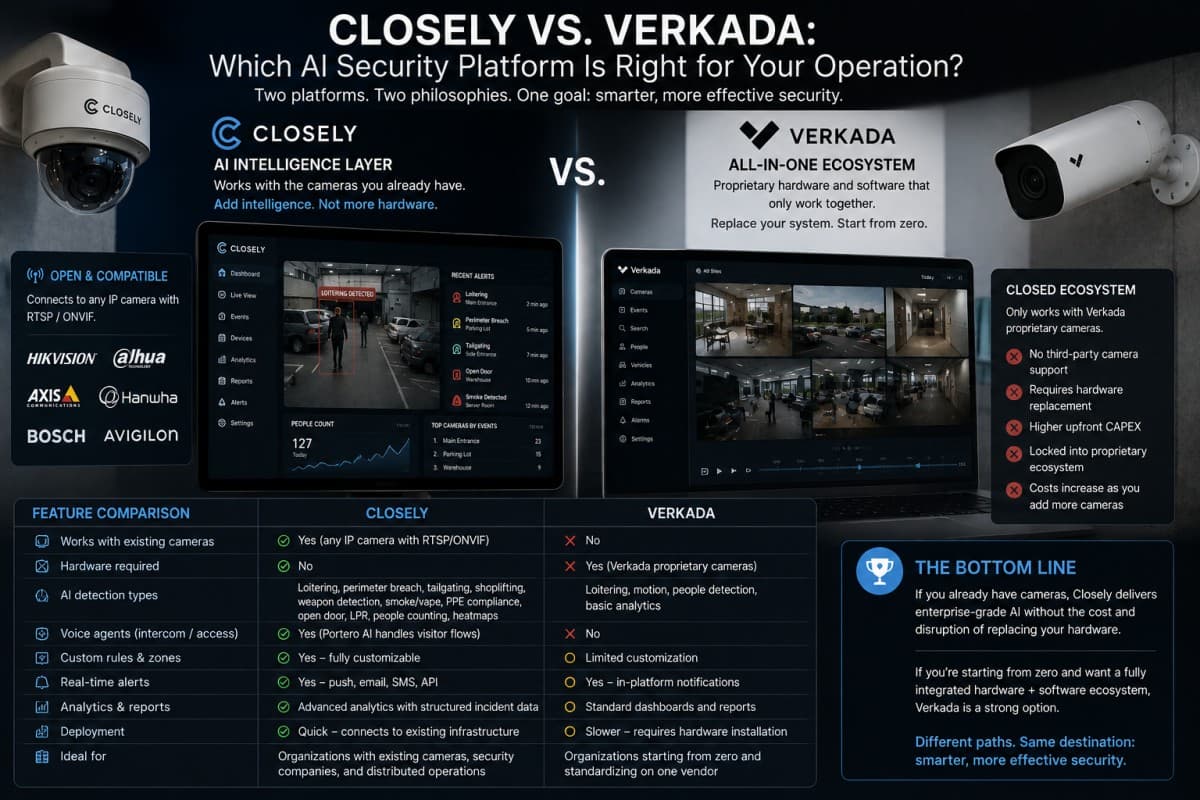
Closely vs. Verkada: Which AI Security Platform Is Right for Your Operation?
Verkada requires proprietary hardware. Closely activates AI on cameras you already have. An honest comparison of both platforms to help you make the right decision.
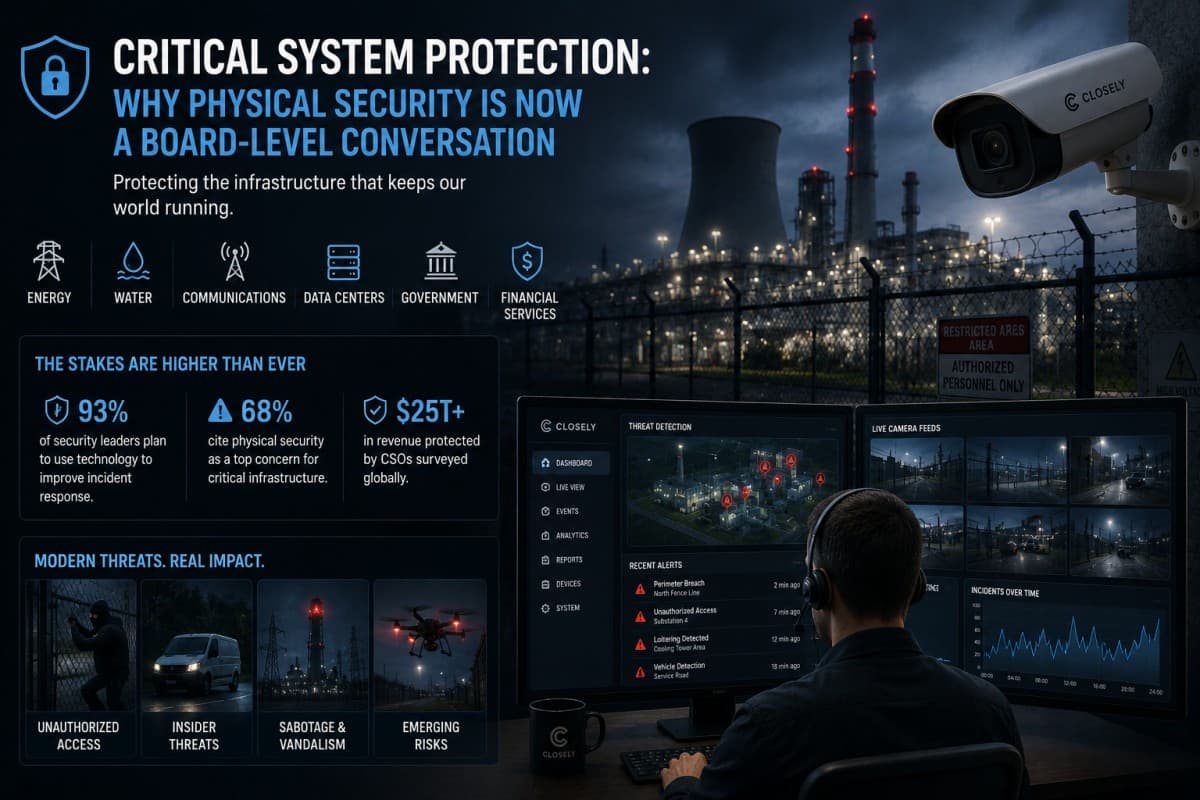
Critical System Protection: Why Physical Security Is Now a Board-Level Conversation
Power grids, water treatment plants, data centers, financial networks. These are the systems that everything else depends on. And their physical protection has never been more complex or more consequential.
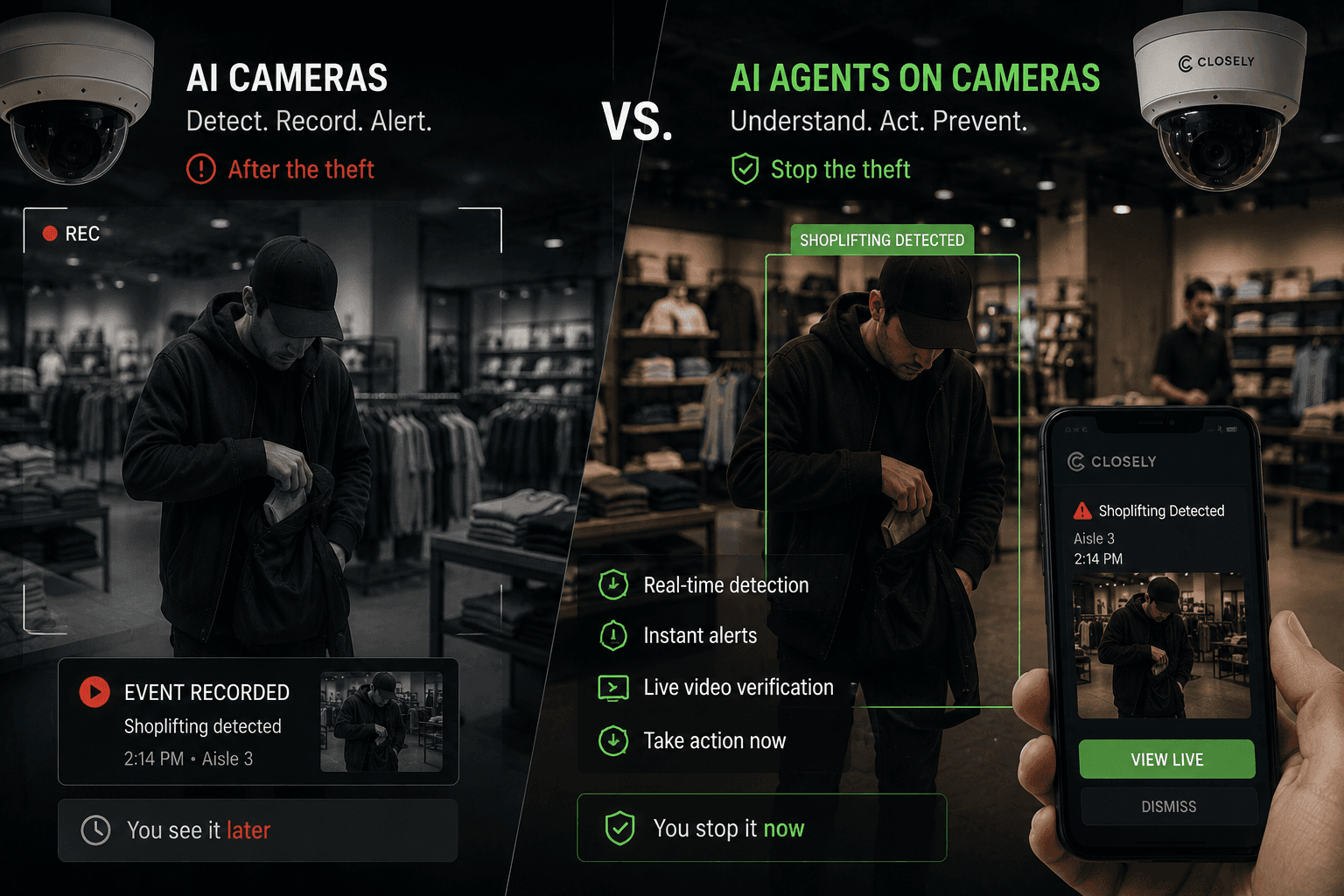
AI Cameras vs. AI Agents: Which One Actually Prevents Theft?
Most AI cameras just record theft. AI agents on cameras detect shoplifting in real time and alert you while you can still do something about it. Here is what business owners need to know.

Megapixel Cameras and Video Quality: What Resolution Actually Does
Megapixels are just one part of what makes video useful for AI. Here is what resolution, compression, frame rate, and sensor size actually do to your footage and detection performance.
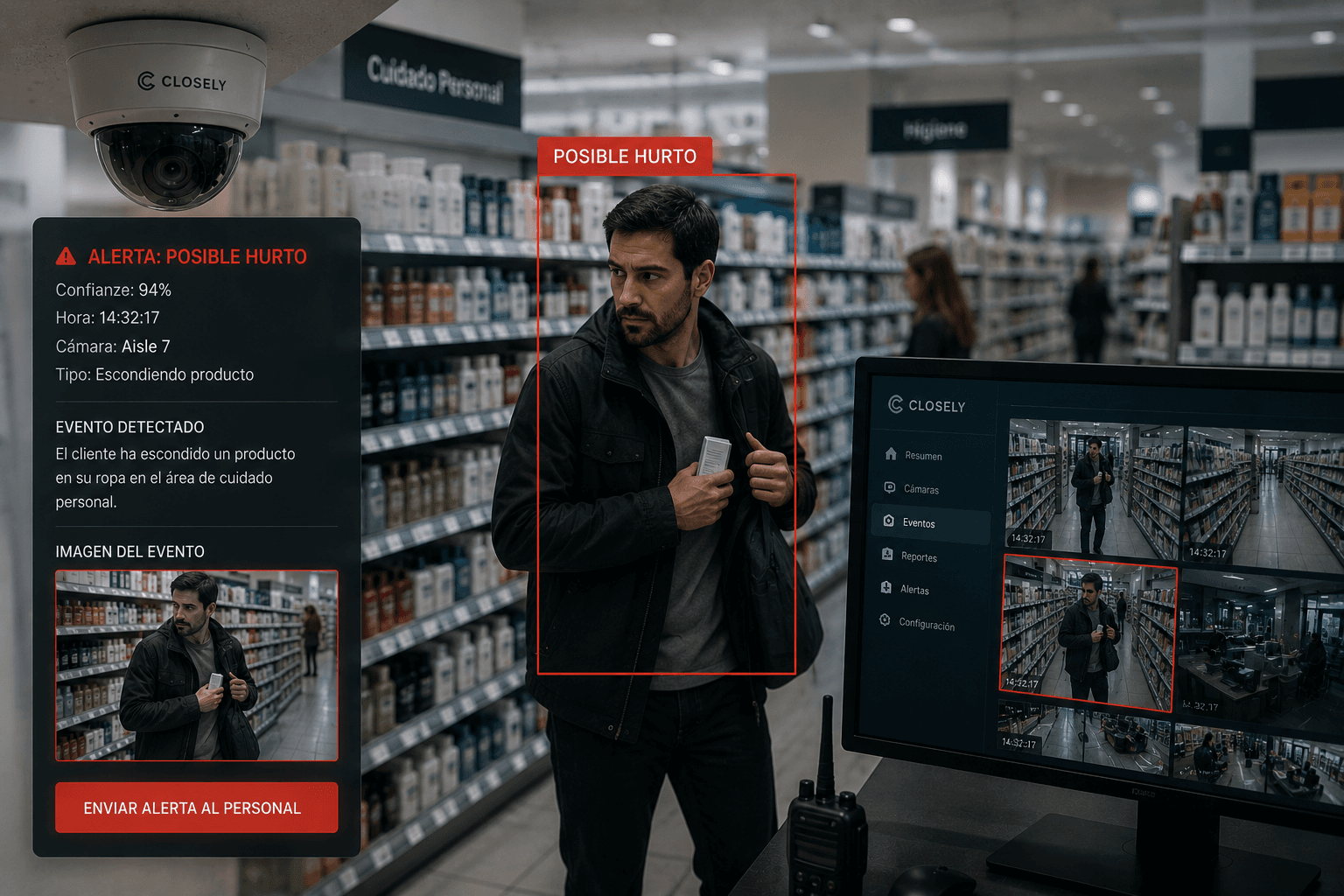
How AI Catches Shoplifters in Retail in Real Time
Retail shrinkage costs the industry over $100 billion a year. AI changes the game from documenting losses to preventing them in real time.
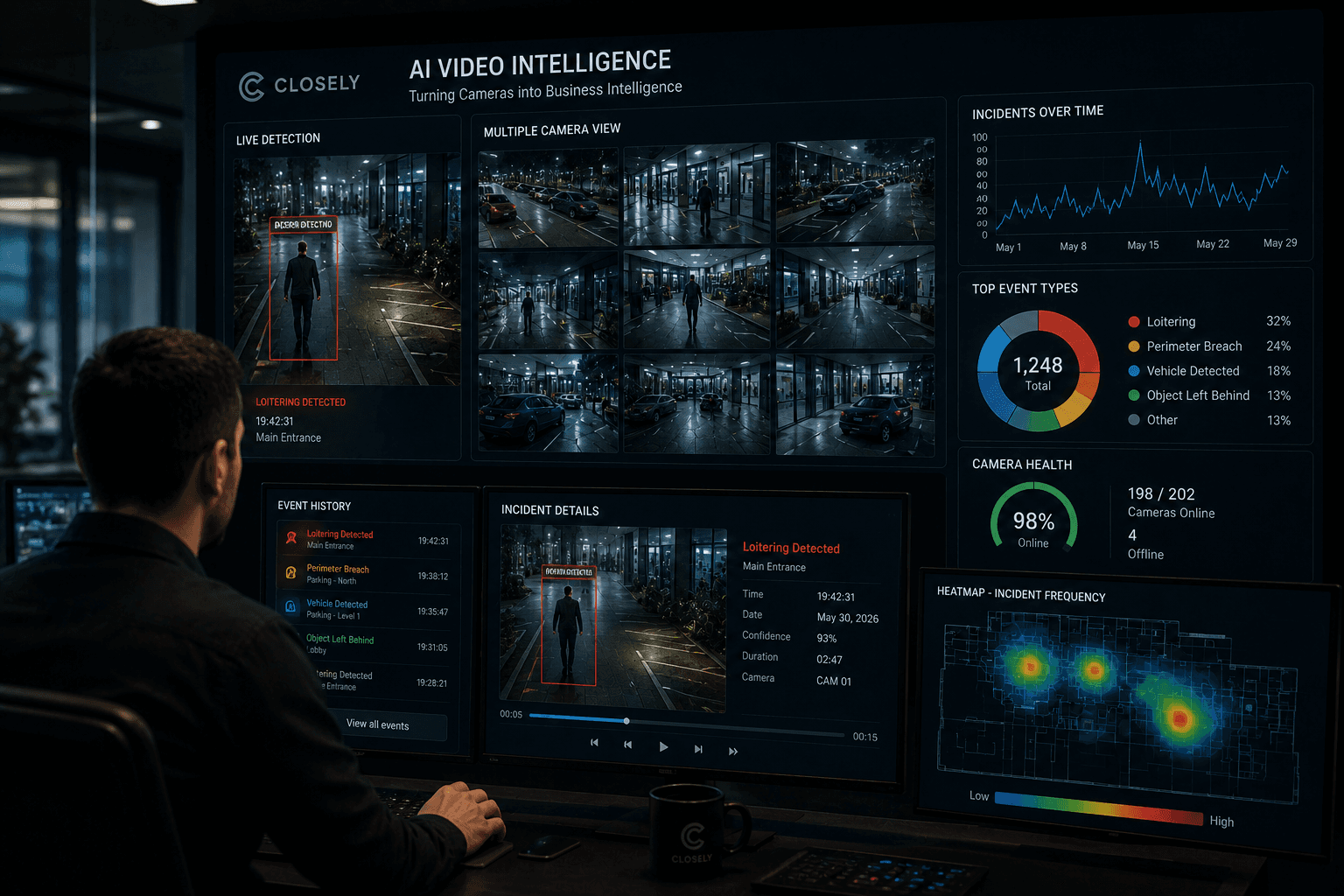
Intelligent Video Analytics: From Recording to Real-Time Intelligence
Most cameras record everything and understand nothing. Intelligent video analytics changes that by converting footage into real-time detection, operational patterns, and institutional business intelligence.
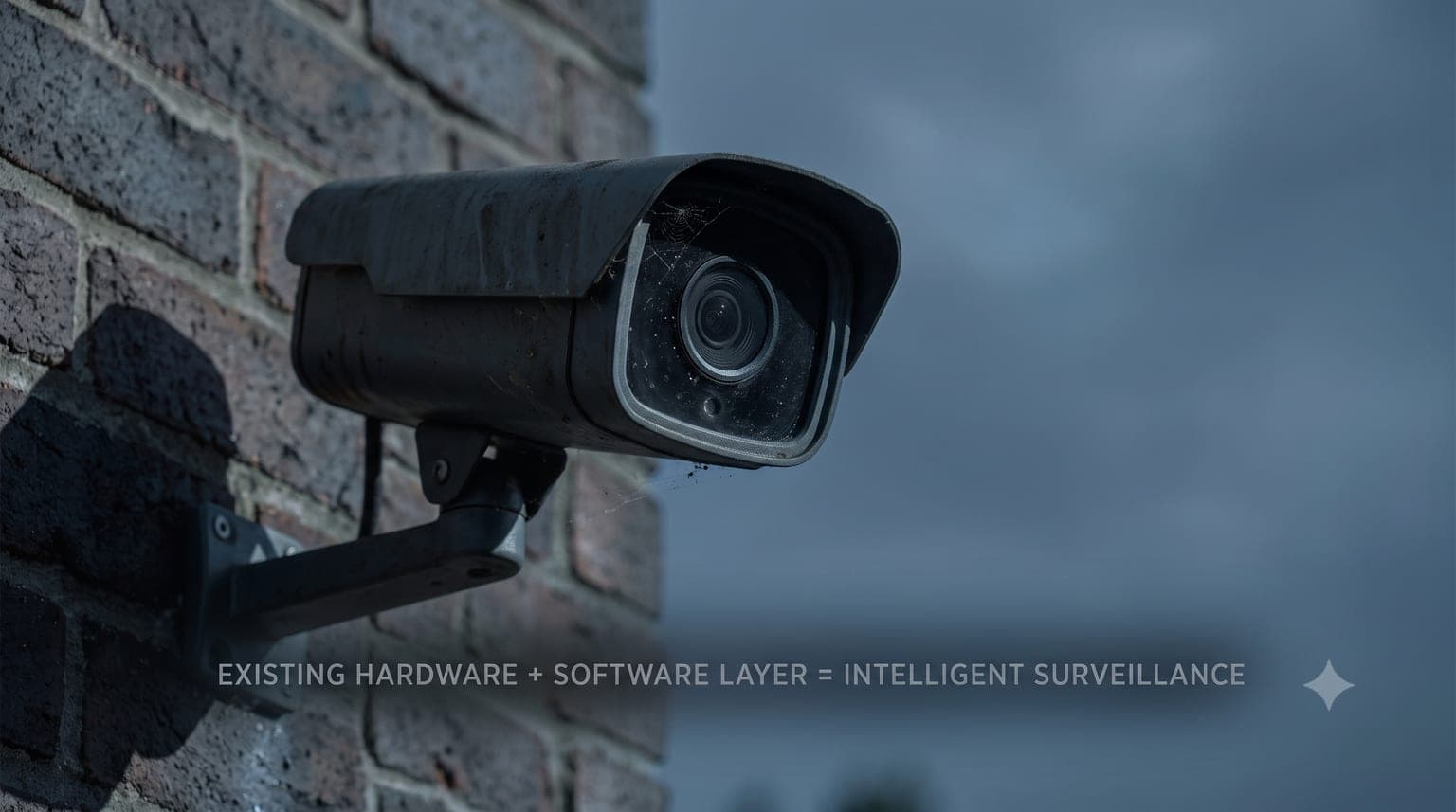
AI Cameras: Do You Actually Need New Hardware?
Most people buying AI cameras are paying for hardware they don't need. Here's what actually makes a camera intelligent — and it's probably not what you think.
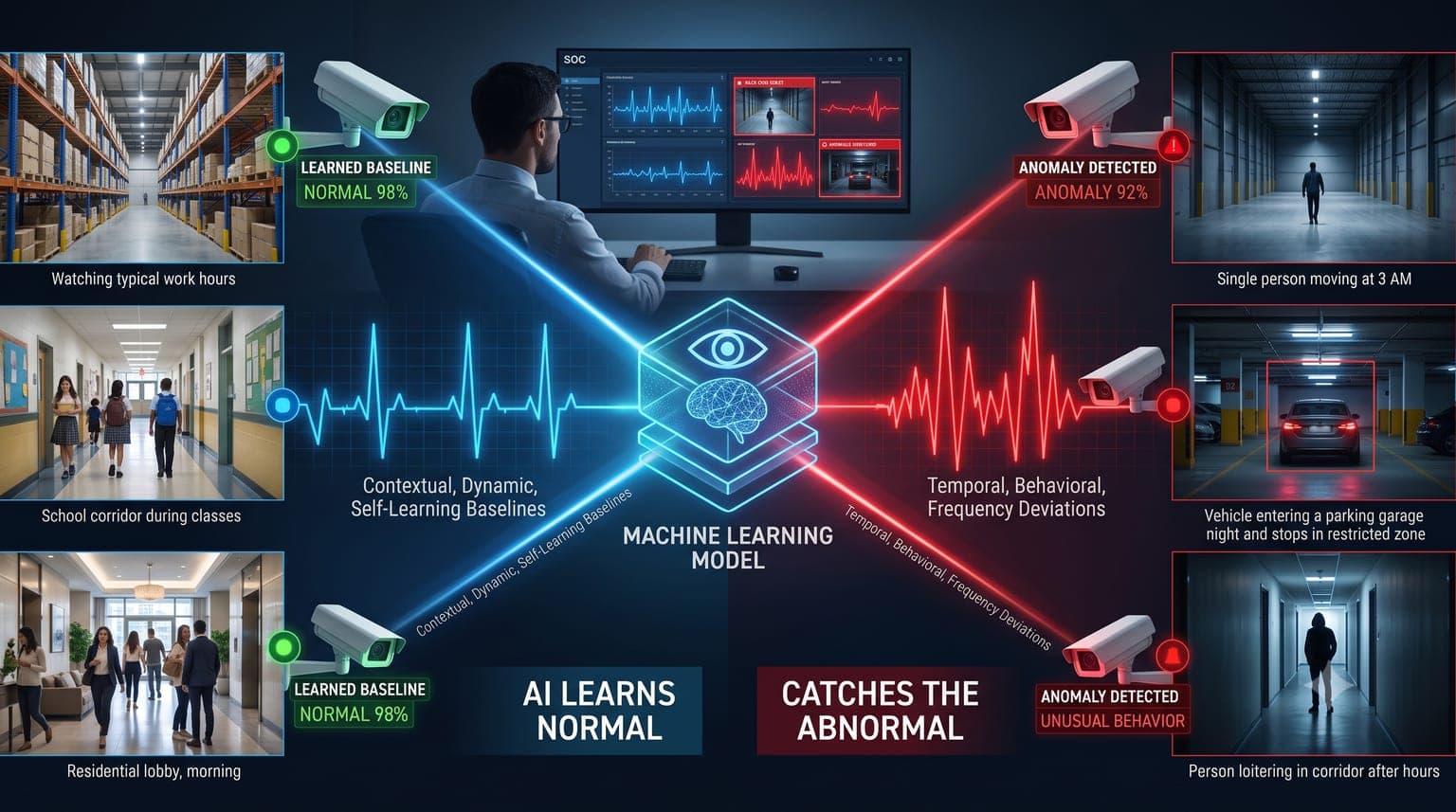
Anomaly Detection and Machine Learning: How AI Learns What Normal Looks Like
The most powerful thing about AI security isn't that it detects threats. It's that it learns what your environment looks like when nothing is wrong.
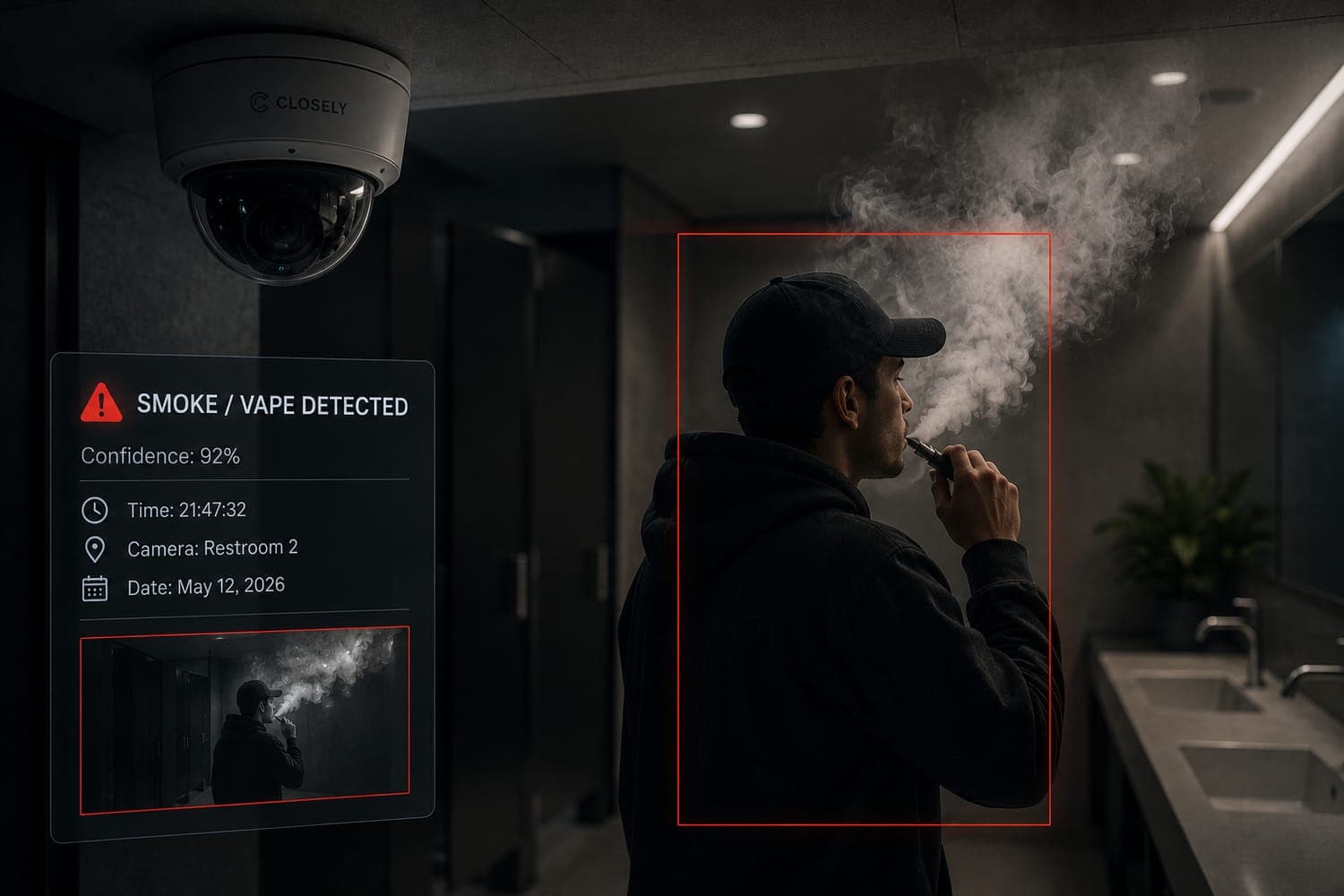
Vape and Smoke Detection: How AI Cameras Are Catching What Traditional Detectors Miss in 2026
Traditional smoke alarms react to fire. AI camera-based smoke and vape detection catches the problem before it becomes one — with timestamped visual evidence.
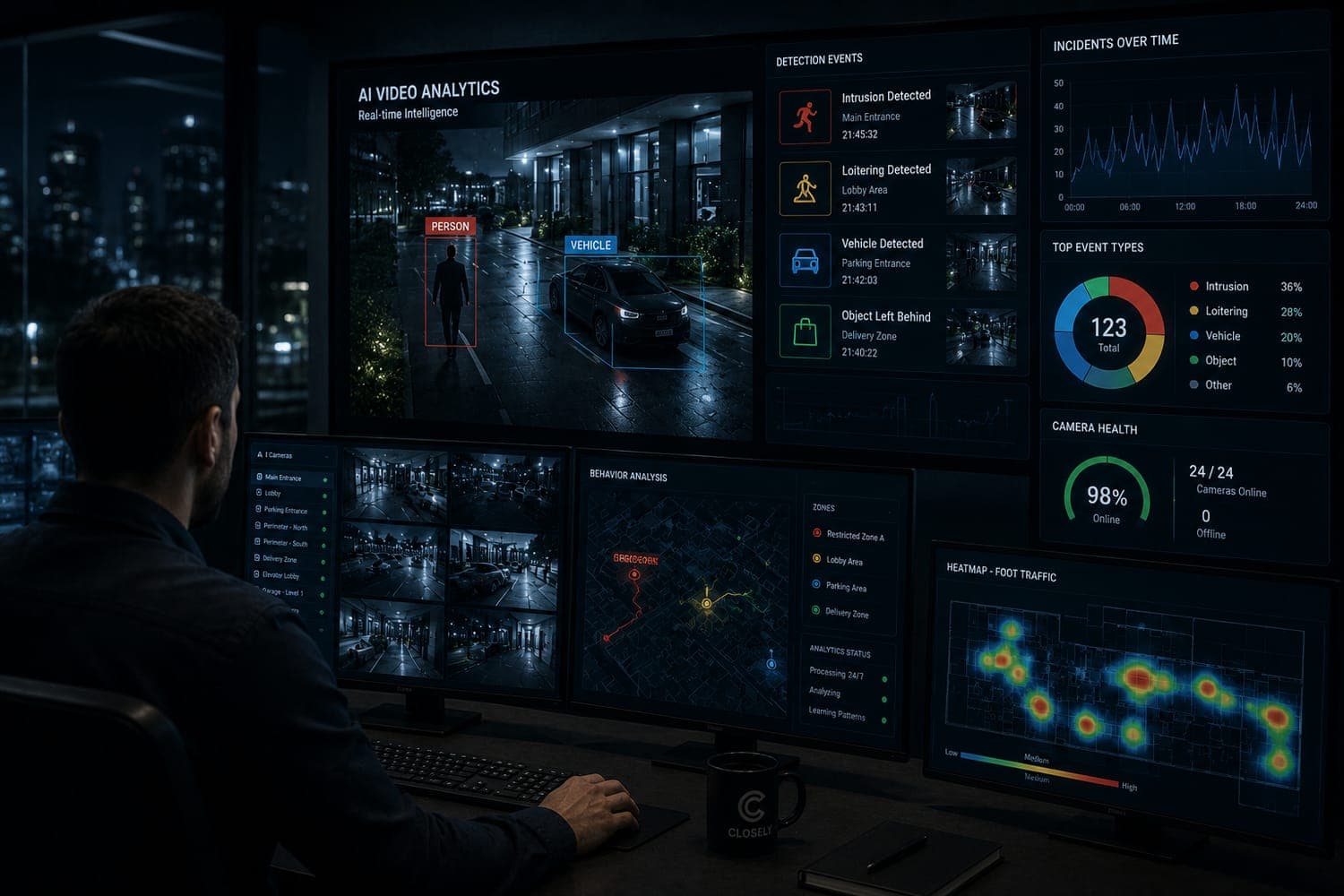
AI Video Surveillance and Analytics: Turning Security Cameras Into Business Intelligence in 2026
AI video analytics doesn't just detect threats — it turns every camera feed into structured intelligence. Here's how it's changing security operations.
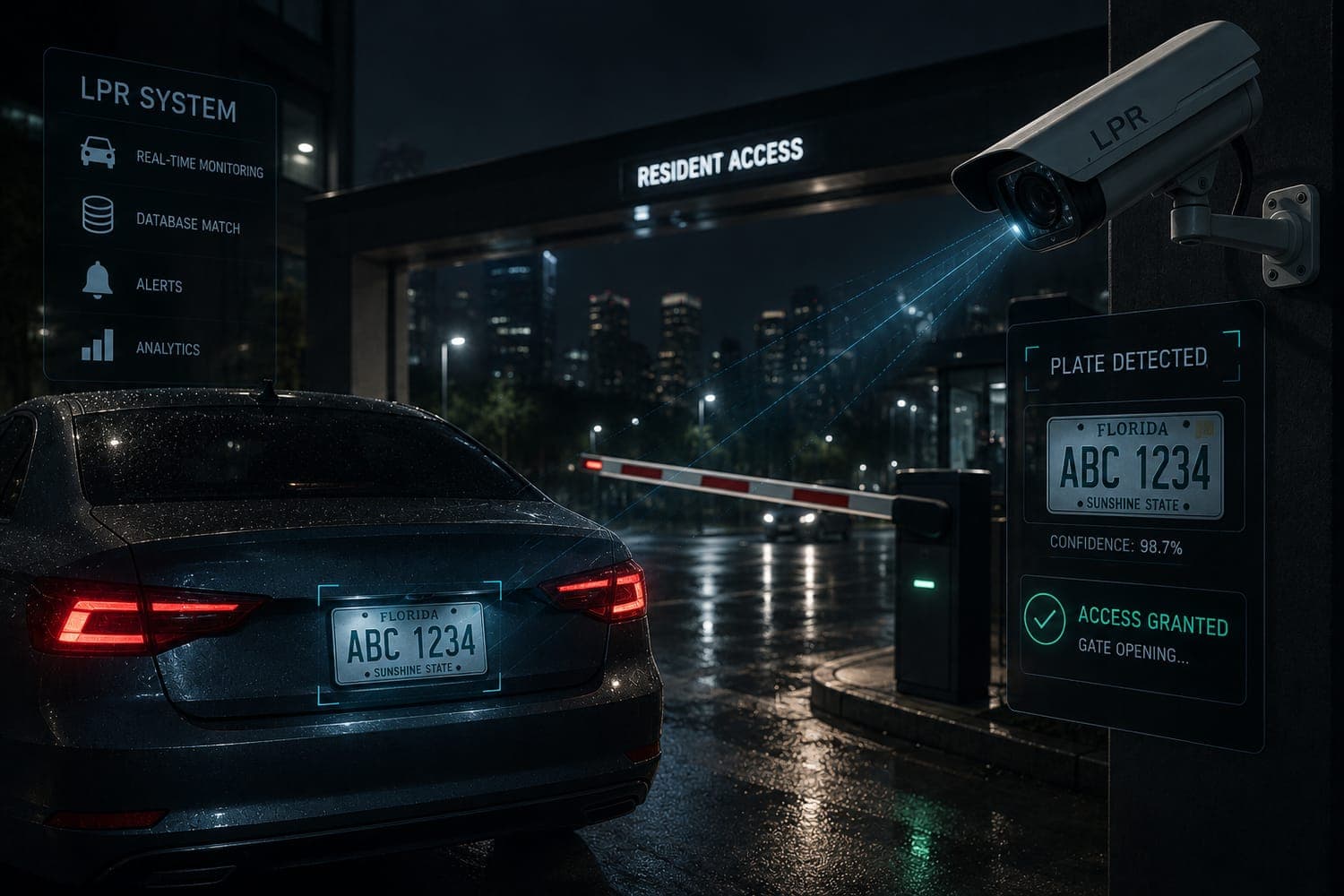
License Plate Recognition Technology: How LPR Is Changing Vehicle Security in 2026
How license plate recognition works, where it adds real value, and what you need to know before deploying it — from parking access to law enforcement.
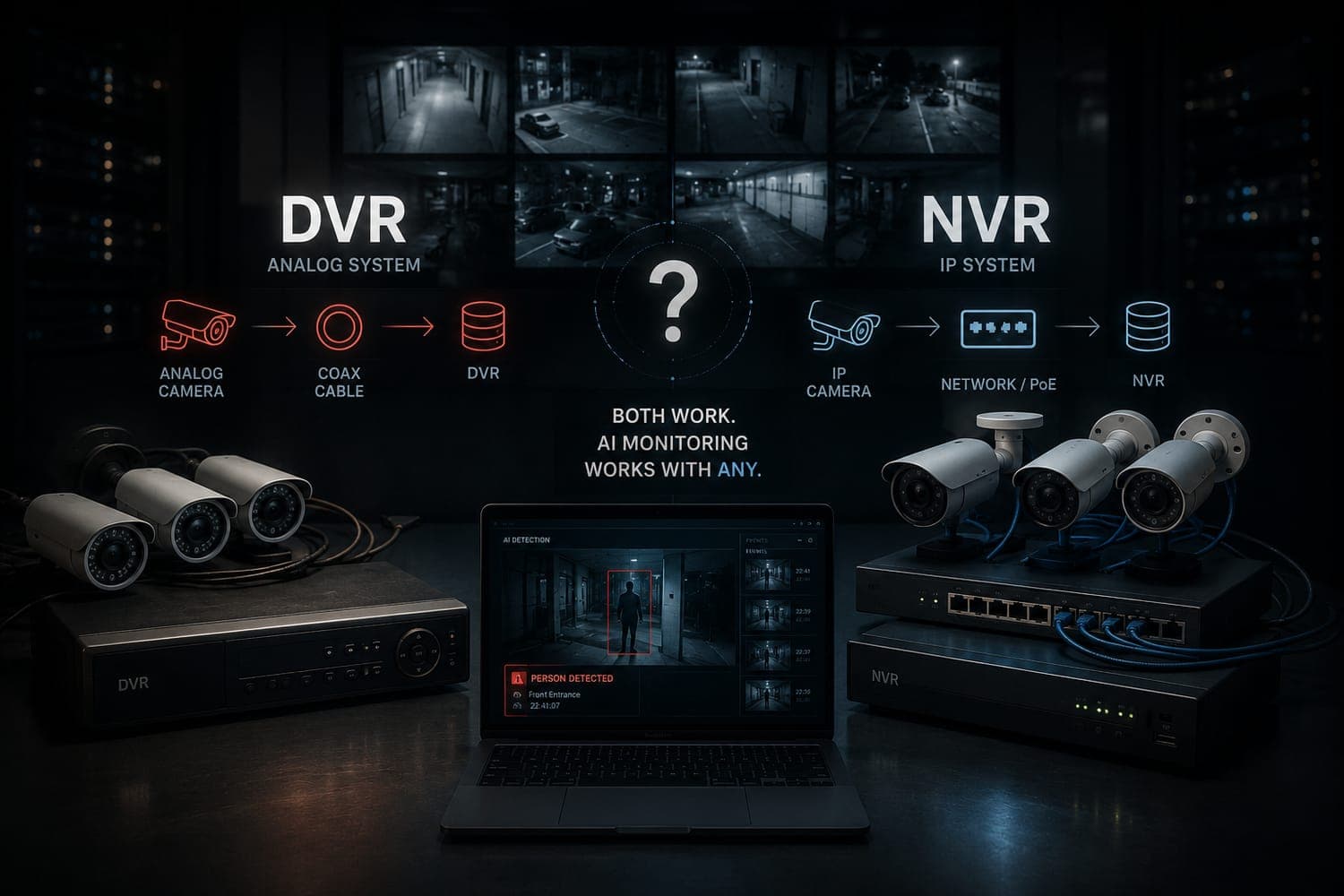
DVR vs NVR: What's the Difference and How AI Monitoring Works With Both in 2026
What's the difference between a DVR and an NVR, which is better for AI monitoring, and does it matter if you already have both? The complete guide for security operators.
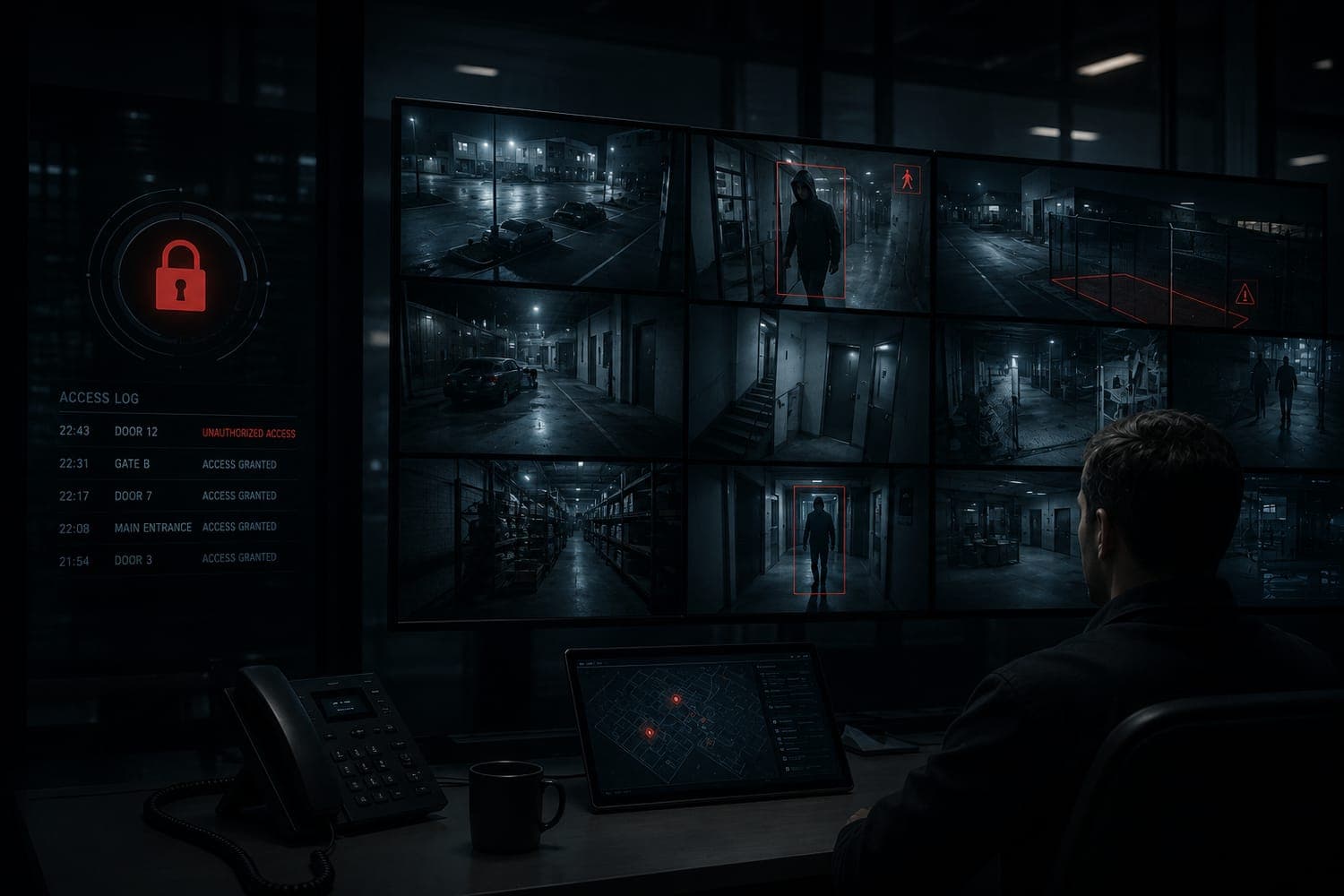
IP Camera and PoE Security Systems: The Complete Guide to Connecting Any Camera to AI Monitoring in 2026
You already have the cameras. Here's how to make them intelligent — connecting any IP or PoE security system to AI monitoring without replacing a single device.
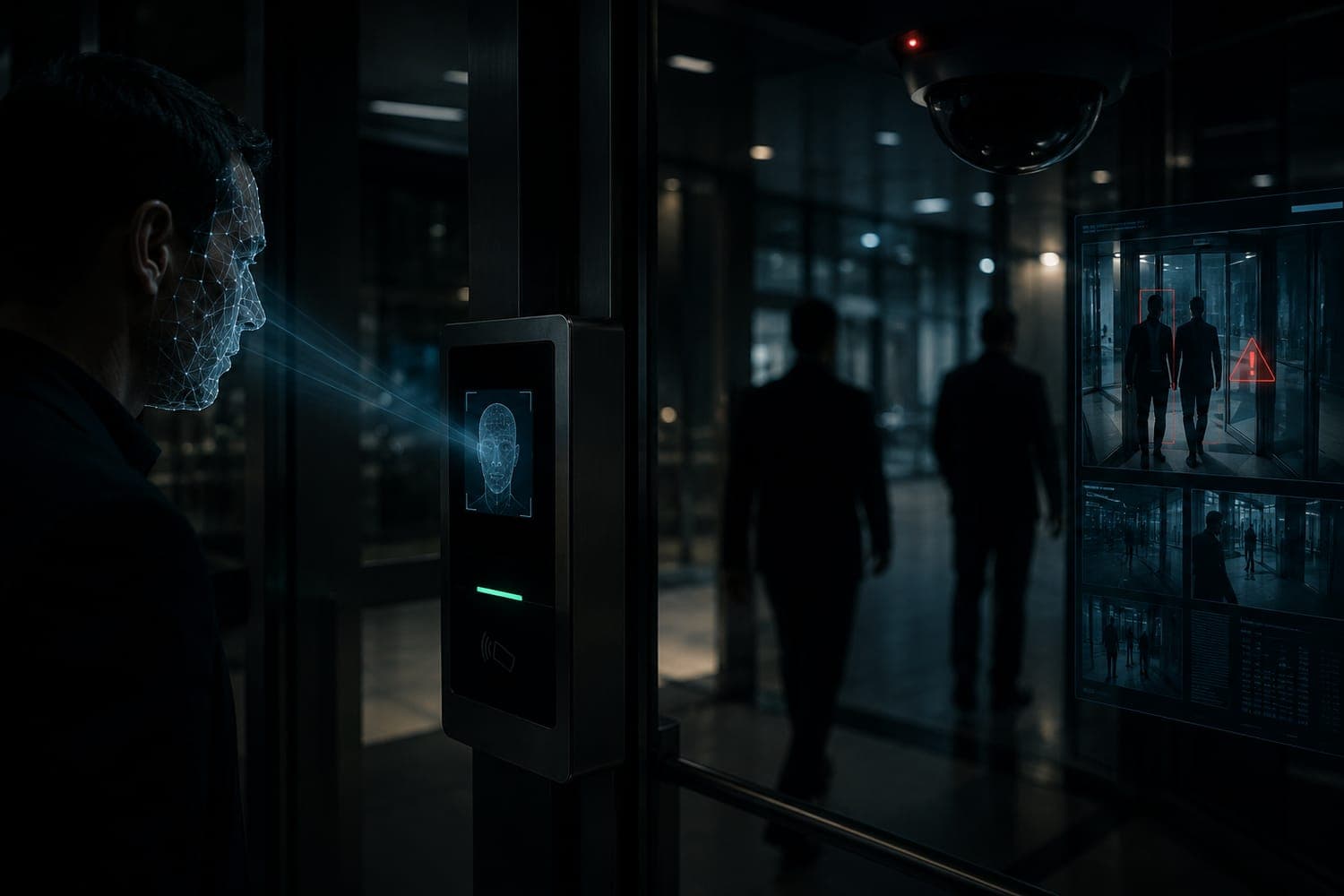
AI Access Control Systems: How Intelligent Security Is Redefining Who Gets In
Traditional access control only checks credentials. AI-powered access control checks behavior — and that changes everything for security operations.
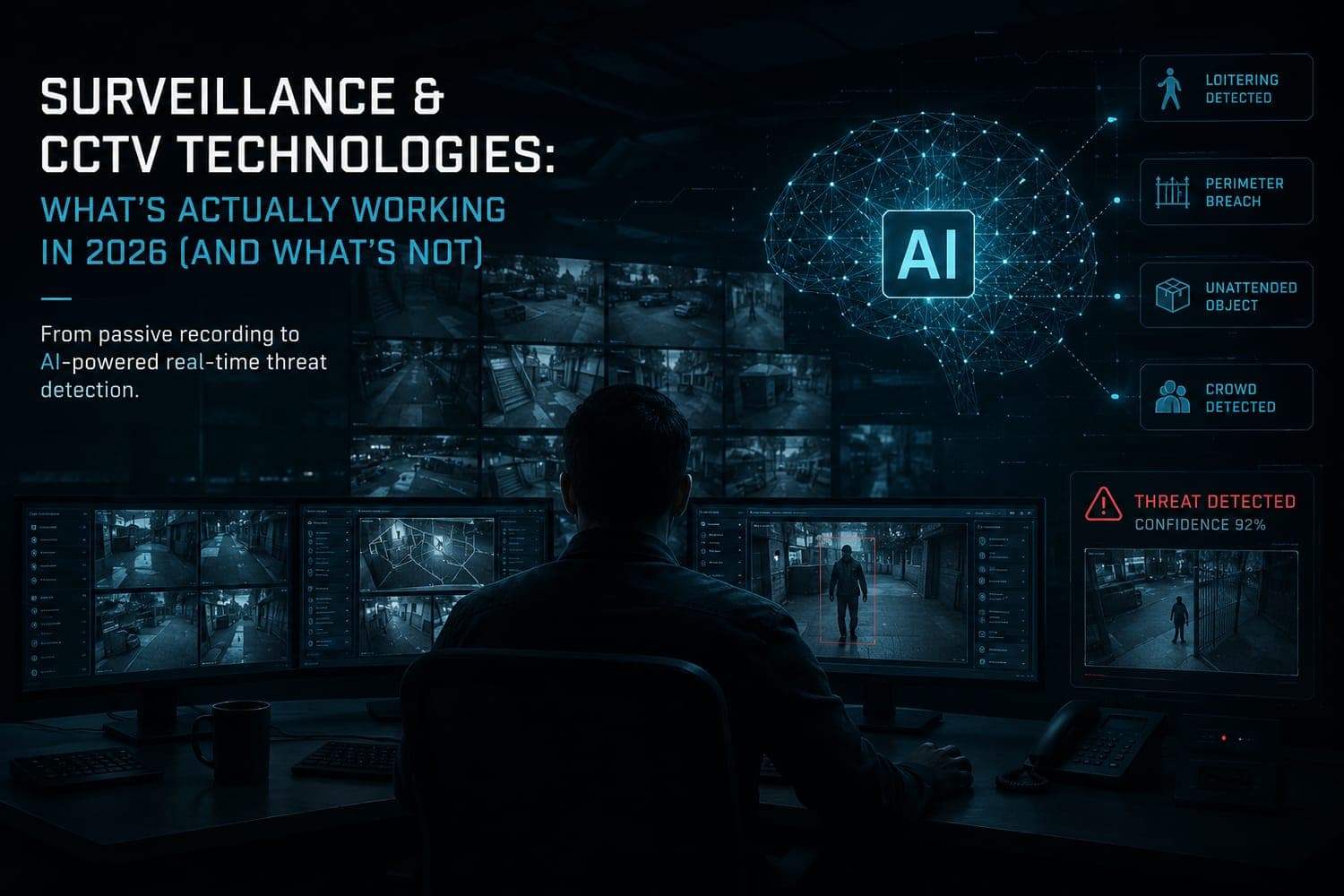
Surveillance and CCTV Technologies: What's Actually Working in 2026 (and What's Not)
A practical breakdown of how CCTV surveillance systems, AI video surveillance, and video analytics software are changing security operations — and what to look for.

False Alarm Fatigue: Why Security Teams Stop Responding to Alerts
Studies show security teams ignore up to 95% of alerts because most are false positives. The problem isn't alerting — it's alert quality. Here's the real cost of false alarm fatigue and how modern AI detection eliminates it.