False Alarm Fatigue: Why Security Teams Stop Responding to Alerts
Studies show security teams ignore up to 95% of alerts because most are false positives. The problem isn't alerting — it's alert quality. Here's the real cost of false alarm fatigue and how modern AI detection eliminates it.
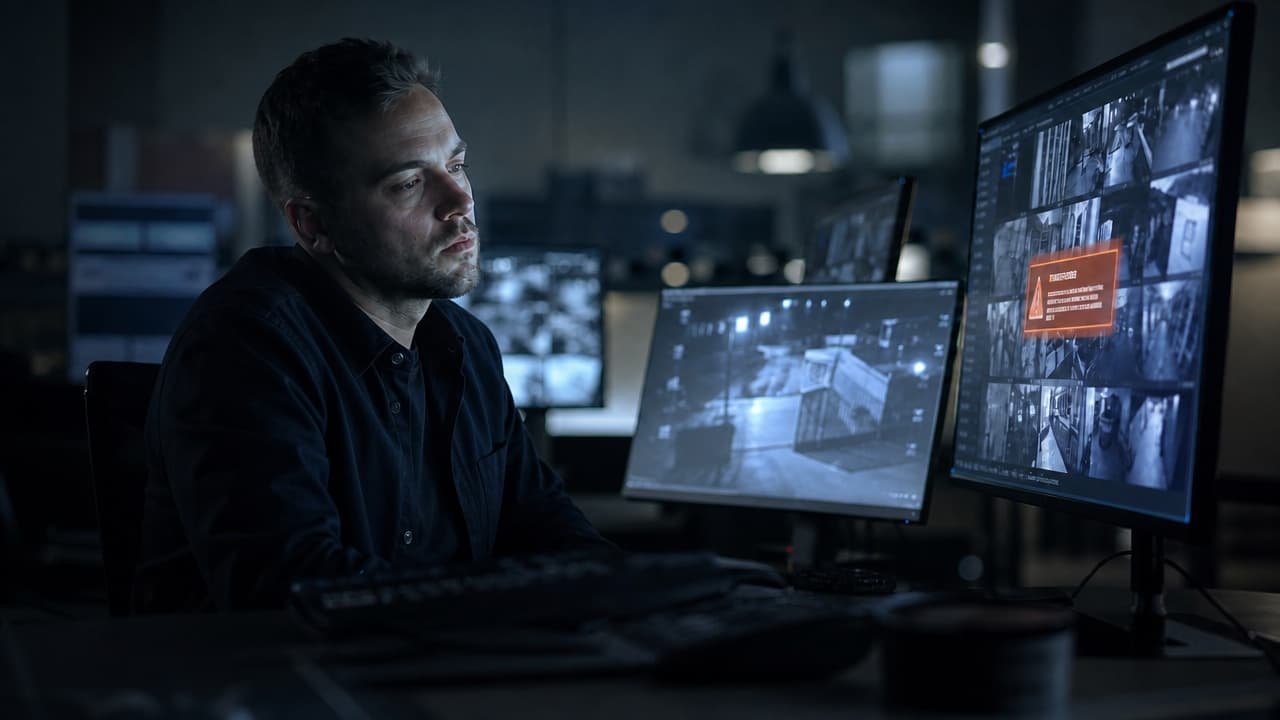
There's a pattern that plays out in almost every security operations center: the alert fires, the operator glances at the screen, sees nothing unusual, and mutes it. Again. For the hundredth time that shift.
This is false alarm fatigue, and it's arguably the single biggest threat to the effectiveness of any physical security operation. Not because the alerts aren't firing — they are — but because they've been trained to mean nothing.
What Is False Alarm Fatigue?
False alarm fatigue (also called alert fatigue) is the desensitization that occurs when an operator is exposed to a high volume of irrelevant or incorrect alerts. After enough false positives, the human brain stops treating each new alert as meaningful.
It's not negligence. It's an adaptive response. When 95% of your alerts turn out to be shadows, wind-blown debris, or headlights sweeping across a parking lot, your brain learns to deprioritize them. The problem is that the 5% that actually matter get deprioritized too.
In physical security, this has direct operational consequences:
- Real incidents go undetected while operators are conditioned to dismiss alerts
- Response times increase because the team has learned to verify (slowly) rather than act
- Operator morale drops because the job becomes numbing rather than meaningful
- Clients lose confidence when they report incidents that your system "should have caught"
Why Traditional Motion Detection Creates Noise
The root cause of most false alarm fatigue in physical security is motion detection technology that doesn't understand context.
Standard motion detection works by comparing frames pixel by pixel. If enough pixels change, the system assumes something happened. This is fast and cheap to compute — which is why it was the standard for decades — but it produces a catastrophic noise-to-signal ratio.
A security camera pointed at a parking lot will trigger on:
- Wind moving tree branches
- Shadows from passing clouds
- Headlights sweeping across the frame
- Rain or insects near the lens
- Changes in lighting at sunrise/sunset
- Animals (cats, birds, insects)
None of these are security events. But a pixel-comparison system cannot tell the difference between a tree branch and a person climbing a fence.
The result: a camera configured sensitively enough to catch real intrusions will generate dozens of false alarms per night. Operators configure it less sensitively to reduce noise — and real events start getting missed.
How Computer Vision Changes the Equation
Modern computer vision doesn't compare pixels. It understands what's in the frame.
Object detection models (like the YOLOv8 architecture Closely uses as its second processing stage) classify objects: persons, vehicles, animals, bicycles. They assign confidence scores. They track motion trajectories.
This eliminates the environmental noise category almost entirely. A tree branch moving is not a person. Headlights are not a person. A cat crossing the parking lot is a cat, not an intruder.
But object detection alone is still not enough. Knowing what is in the frame doesn't tell you whether it constitutes a security threat.
The Contextual Reasoning Layer
This is where AI reasoning — the third stage in Closely's pipeline — changes everything.
Consider two scenarios on the same camera at the same address:
Scenario A: A person enters through the back door at 7:30pm carrying a box. They badge in. They're inside for 20 minutes. They leave.
Scenario B: A person enters through the back door at 7:30pm carrying a box. There's no badge access event. The door remains open for 3 minutes after they enter.
Object detection sees the same thing in both scenarios: a person entering a door. The reasoning layer understands that Scenario B is anomalous — missing the expected badge access, and an unusually open door.
This contextual understanding is configured per camera, in plain language: "Back service door. No authorized entry after 8pm. Report any entry without a corresponding badge event."
The AI doesn't need to be trained on thousands of labeled examples for your specific location. It understands the rule you describe and applies it to what it sees.
The Math: From 1,000 Alerts to 12
Here's how this plays out in practice for a typical deployment.
A 20-camera installation using standard motion detection might generate 1,000+ events per day. After filtering by a human, maybe 50 are worth reviewing. After review, 5–10 are actual incidents worth acting on.
The same installation with Closely's three-stage pipeline:
- Motion trigger filters 95% of events before reaching computer vision
- Computer vision filters to known object classes (persons, vehicles)
- Reasoning layer evaluates against per-camera rules
The result is typically 10–15 actionable alerts per day — all with video clips attached, all representing events that match the configured security rules.
Your operators go from ignoring 1,000 alerts to taking action on 12. Each of those 12 arrives with the clip, the timestamp, and enough context to make a decision in under 10 seconds.
Rebuilding Trust in Your Alert System
The long-term benefit of eliminating false alarm fatigue goes beyond the immediate operational improvement. It's about rebuilding the psychological contract between your operators and your alert system.
When every alert that fires deserves attention, operators engage differently. They stop treating alerts as background noise and start treating them as the events they actually are.
This change in operator behavior is measurable: response time decreases, validation accuracy improves, and — counterintuitively — operators report higher job satisfaction because their work becomes purposeful again.
A monitoring center where the alert system is trusted is a fundamentally different operation than one where it's been tuned out. The difference shows up in incident outcomes, in client retention, and in the team's sense of what the job is actually for.
What This Means for Your Operation
If false alarm fatigue is degrading your operation — and in most traditional security setups, it is — the solution is not to add more cameras or hire more operators. Those interventions don't address the root cause.
The root cause is that your detection layer doesn't distinguish between signal and noise. Fix that, and the downstream effects resolve themselves.
Modern AI computer vision, applied correctly with per-camera contextual rules and a human-in-the-loop validation step, can reduce your alert volume by an order of magnitude while increasing the percentage of alerts that represent real threats.
That is not a modest improvement. It's a structural change in what your security operation can do.