Buen Fin 2026 in Mexico: How to Protect Your Store from Petty Theft with AI
A practical retail security guide for Mexico's Buen Fin 2026: how to catch petty theft and prevent store theft with the cameras you already have.
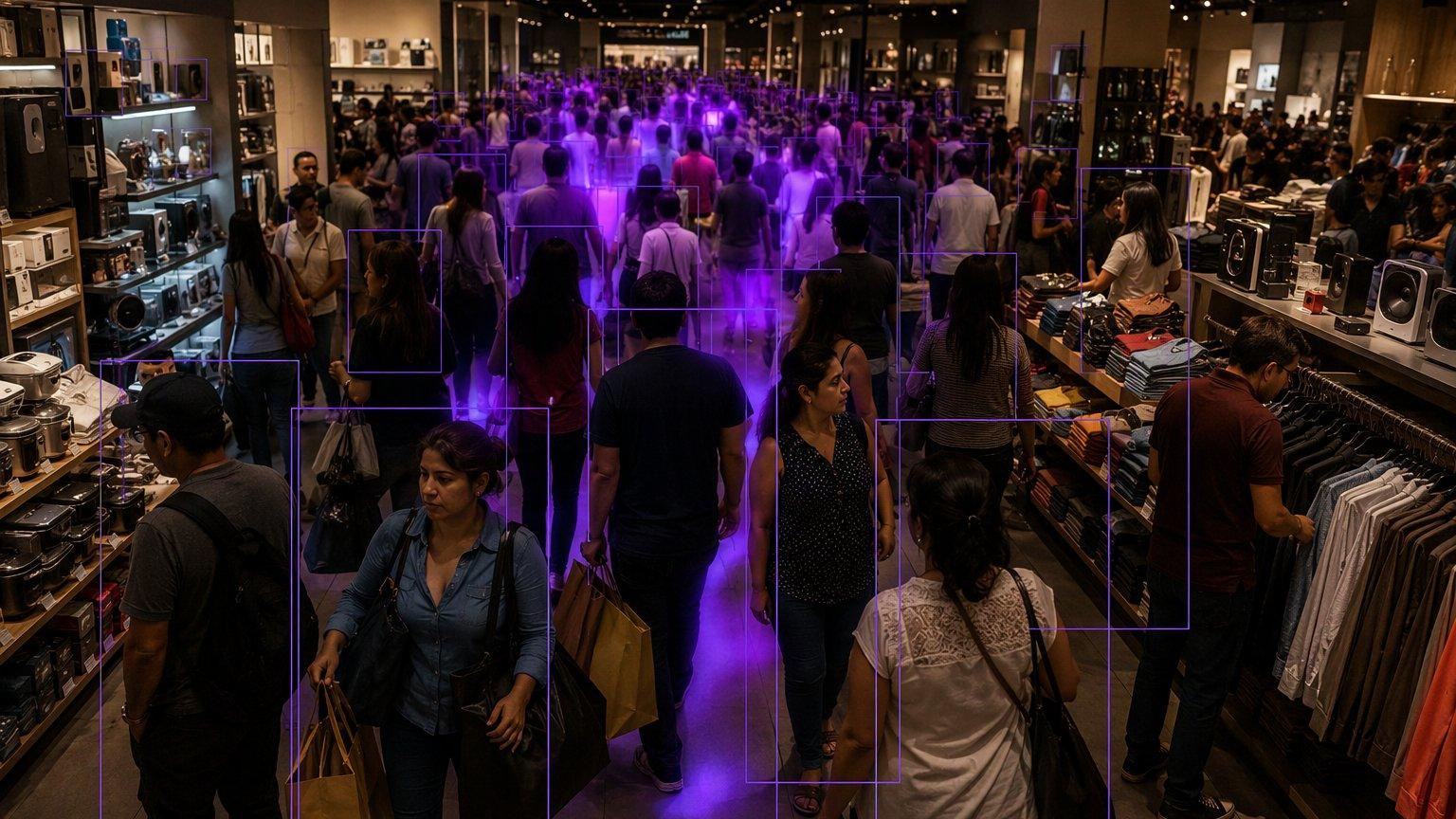
Short version: Buen Fin packs more customers, more rush and more seasonal staff into a few days, which is exactly what petty theft and organized retail theft need to go unnoticed. Retail security during Buen Fin 2026 is won before you open: cameras that someone (or something) is really watching, clear rules for staff and real-time alerts that let you prevent store theft while it's happening.
Buen Fin 2026: why retail security gets harder in these days
Buen Fin is the biggest sales week of the year for many Mexican stores, and also the hardest to protect. Twice the people walk the same aisles, employees are focused on the register and the lines, seasonal hires don't know the store yet, and sale merchandise piles up in places that are normally out of sight.
A note up front: the official Buen Fin 2026 dates have been reported differently in the press, so confirm them on the official site (elbuenfin.org) before planning shifts. The pattern doesn't change. Ejecentral's piece "Aguas en el Buen Fin" reports increases of 50% to 63% in store theft during the season. That is a press figure we haven't been able to check against an official source, so treat it as a warning sign, not a settled statistic.
Clothing, electronics, jewelry and medicine tend to be among the most stolen items in that same coverage. If you sell any of those, this guide is for you.
Petty theft: the loss that doesn't show up until inventory
Petty theft ("hurto hormiga," or ant theft) is small, repeated, almost invisible stealing: a garment in a bag, an accessory in a pocket, a swapped tag, a product left in the cart on the way out. None of it looks serious. Together, over a weekend of sales, it can wipe out a good part of your margin.
The hard thing about petty theft is that it sets off no alarm. No noise, no struggle; just a shortage you find days later, when inventory doesn't match and you no longer know when or how it happened. So it helps to understand what you can and can't see on the sales floor:
- Merchandise that moves without going through the register, especially in fitting rooms and low-visibility areas.
- People walking the store without buying, filling bags in places with no camera.
- Groups that split roles: one distracts the clerk, one takes, one leaves.
- Irregular returns and discounts at the register on the busiest days.
The starting point for retail security isn't more guards, it's more visibility on those moments.
AI cameras for stores: from recording to alerting
Most stores already have cameras. What almost nobody has is someone watching them during peak hours. And during Buen Fin nobody can: the manager is on the floor, the guard is at the door and the monitoring center (if there is one) is swamped.
AI cameras for stores change that equation because they analyze video in real time and alert you when something is out of the ordinary: a person entering a restricted area, someone lingering too long in a high-value aisle, a group moving in a coordinated way, or an exit through a door that should be closed. They don't replace your team; they tell it where to look.
With Closely you don't have to replace your cameras. The platform connects through RTSP/ONVIF or your NVR (Hikvision, Dahua, Axis, Bosch, Reolink and others), analyzes video with multiple filter layers that cut false alarms by up to 88%, and an operator validates every alert before anyone is dispatched. You can try Closely on your current cameras with a free two-week demo, just in time to see how it behaves in the season.
Plain-language rules for peak days
You don't have to program anything. Rules are written the way you'd say them: "alert me if someone enters the stockroom without a uniform," "alert me if a person spends more than five minutes in the electronics aisle," or "alert me if the back door opens during sales hours." Changing a rule for your busiest Saturday takes minutes, not a technician visit.
Store theft prevention: a checklist for Buen Fin week
These measures don't need a big investment and work best if you assign each to a named person:
- Check that every camera records and is aimed correctly. A camera bumped by a customer or covered in dust leaves a perfect blind spot.
- Cover entrances, exits, registers, fitting rooms and stockroom. If you can't cover everything, prioritize high-value merchandise and exits.
- Rework the sales floor. High-value goods within sight of the register, clear aisles, mirrors or angles that remove hidden corners.
- Train seasonal staff. A ten-minute talk on what to watch for and whom to tell is worth more than a sign.
- Define who gets the alert and how fast they respond. With no owner, the alert gets lost.
- Coordinate with your mall or local police. Many malls reinforce security on these dates; ask about contact channels.
- Keep evidence organized. Date, time and camera make the difference in a report.
If your store is in a mall, this guide on store and mall security during the holiday season covers how to coordinate the floor with mall management.
Organized retail theft in peak season: what changes from petty theft
It's not all petty theft. In high-traffic seasons, groups with defined roles also appear: one watches, one distracts, one takes. Their advantage is speed and the fact that your team is overloaded.
What to do differently:
- Detect patterns, not just events. Several people entering together and spreading through the store is a more useful signal than one person looking at a product.
- Prioritize a visible response. A clerk's greeting and an attentive guard at the entrance deter more than a hidden camera.
- Document everything. Clear images of people, vehicles and plates are the basis of any report.
To see how this problem looks in Mexico City, our analysis of business theft in CDMX has the context, and the guide to AI loss prevention in retail goes deeper into measuring shrinkage.
What to do once a theft is detected
The alert is half the work; the response is the other half. Every store should have a short, printed protocol that all staff understand:
- Safety first. Nobody should physically confront a suspect. The priority is staff and customers.
- One person decides. A manager or supervisor validates the alert and decides whether to call police or the guard.
- Preserve the video. Mark the clip and save it before the recorder overwrites it.
- Log the incident. What happened, what was lost, when, and what was done.
- Review at the end of the season. Adjust shifts, cameras and rules with what you learned.
One important note: we don't make legal promises. Rules on recording, use of footage and reporting can vary by state and type of business, so check with a local attorney.
Frequently asked questions about Buen Fin and retail security
When is Buen Fin 2026?
Different outlets have reported the dates differently, so the safest move is to confirm them on the official Buen Fin site before planning shifts. What matters for your security is preparing days ahead, not the last weekend.
Does store theft go up during Buen Fin?
Mexican press has reported increases of 50% to 63% in store theft during the season, but it's a press figure we haven't verified against an official source. What is clear is that heavier foot traffic and overloaded staff make theft easier.
What is petty theft and how do you detect it?
It's the small, repeated stealing of items that are low in individual value. You detect it with frequent inventory counts, cameras in the highest-loss areas, and real-time alerts when someone lingers in a spot with no camera or moves suspiciously.
How can I prevent theft in my store during Buen Fin?
Check your cameras, rework the sales floor, train seasonal staff, define who responds to alerts and use AI that alerts you in real time. The key is not depending on someone staring at screens all day.
Do cameras help if the theft has already happened?
They help as evidence, but their biggest value is reacting while the event is happening. A camera that only records tells you what happened; one with real-time monitoring lets you stop it.
Can I use my current cameras for AI alerts?
Usually yes. If your cameras or recorder support RTSP or ONVIF, Closely connects without changing hardware. Check first that the image is clear and the highest-loss areas are covered.
Can AI mistake a regular customer for a thief?
It can be wrong, like any system, which is why a human operator should validate every alert before acting. Rather than accusing anyone, the AI flags unusual behavior so a person can decide what to do.
Is it legal to record my customers and employees?
Security cameras are common in stores as long as there are visible notices and the footage is protected. Rules vary by state and business type, so check with a local attorney.
How much does it cost to protect a store with AI?
It depends on the number of cameras and the level of monitoring. Working on the cameras you already own avoids the big cost of replacing equipment, and you pay for the service. The best approach is to request a demo and compare it with what you lose today.
Am I in time to set this up for this Buen Fin?
If you start this week, yes: connecting existing cameras and defining a few basic rules takes days, not months. You can start with the free demo at closely.dev.
The bottom line
Buen Fin isn't won only by selling more; it's also won by losing less. Petty theft and organized retail theft feed on overload, and the best response is to see in time what used to be discovered at inventory. With the cameras you already have, clear rules and real-time alerts, your store can reach Buen Fin prepared. To see it working in your store, request your free demo at closely.dev.