World Cup 2026 Lessons: AI Video Surveillance and Cameras That Look the Right Way
Mexico entered the 2026 World Cup with over 100,000 cameras. What it teaches about AI video surveillance and how to get value from the cameras you own.
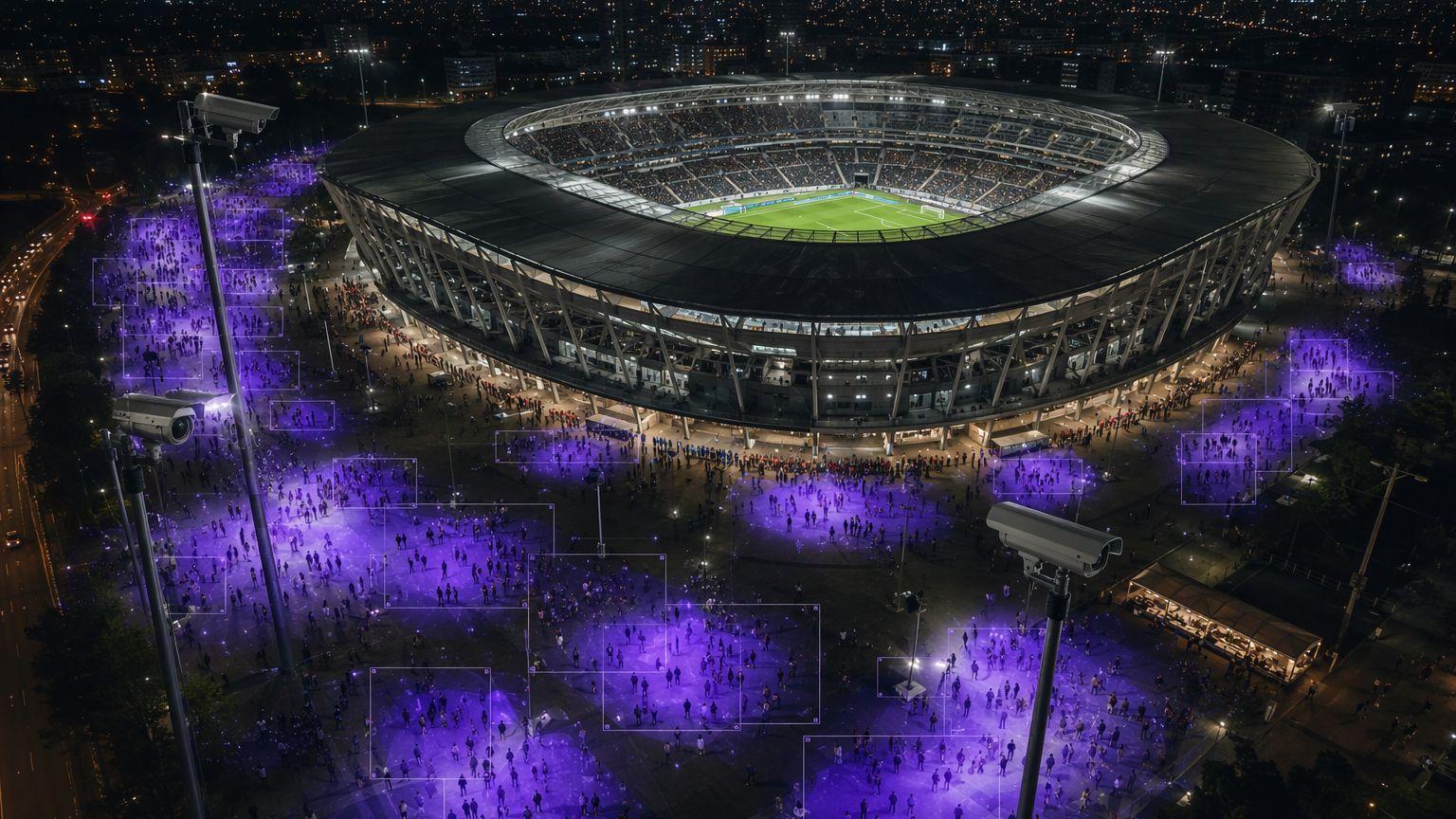
When people talk about the 2026 World Cup and security, the same number comes up: cameras. A lot of them. In March, according to La Opinión, Mexico City's C5 command center spoke of more than 113,000 cameras operated and monitored, including over 30,000 new ones. In July, an Expansión column put its finger on the sore spot in the title alone: "Mexico 2026 and 100,000 cameras looking the wrong way." I couldn't read the full text, so I won't attribute to it anything I haven't verified. But the title captures the question worth asking now that the tournament is over: what good are thousands of cameras if nobody can watch them?
This article isn't about anyone's security policy. It's about what any shopping mall owner, monitoring center or retail chain can learn from that deployment about AI video surveillance, and how to apply it without spending on hardware: you can try Closely on the cameras you already have.
What did the 2026 World Cup teach us about AI video surveillance?
The main lesson is boring and powerful: having cameras is not the same as having vision. A city can install tens of thousands of lenses, but if each operator has to watch dozens of screens at once, most of the video is never seen by anyone. The camera records, the event sits there, and someone reviews it after it happened.
The same thing happens at small scale. A mall with 200 cameras and three people in the monitoring room has the same problem as a city: more eyes than a human team can handle. Only the size differs.
The answer isn't "more screens" or "more operators." It's having the system watch first and tell the person when something deserves attention. That's what well-applied AI does for an operation.
Why don't more cameras mean more security?
Three reasons, all visible in any operation:
- Human attention doesn't scale. After a few minutes staring at a wall of uneventful monitors, the brain tunes out. It's not an operator flaw; it's true of anyone.
- Video volume grows faster than the team. Every new camera adds hours of footage almost nobody reviews.
- False alarms destroy trust. If the system alerts on shadows, insects or blowing bags, the team learns to ignore it. It's the same mechanism we describe in our article on false alarm fatigue.
A big event like the World Cup exaggerates all of this: crowds, many visitors new to the city, long shifts. For local businesses and operators the practical question was always the same: where do I put my attention when everything seems important?
How do we make cameras look the right way?
"Looking the right way" is solved with clear rules. You don't need more lenses; you need to define what matters to you and let the system look for it. In practice:
- Pick the few events that really cost money or put people at risk. A service door open at dawn, someone loitering in a parking lot, a crowd building at an entrance, a person in a restricted area.
- Write them as plain-language rules. In Closely they're set up that way, no code: "alert me if more than a certain number of people are waiting at the main entrance" or "alert if anyone enters the warehouse after hours."
- Filter before bothering the operator. Closely uses multi-layer filters and cuts false alarms by up to 88%. Less noise, more credibility.
- Let a person validate. The operator reviews the event and decides before dispatch. The AI suggests; the human decides.
- Use the cameras you already have. Closely connects through RTSP/ONVIF or your NVR to brands like Hikvision, Dahua, Axis, Bosch or Reolink. No proprietary hardware.
If you want to see how this would look on your own operation, you can request a free two-week demo at closely.dev.
What happens to the infrastructure after the event?
This is the part that's discussed least. When a tournament ends, an uncomfortable question remains: what do we do with everything that was installed? A camera without analysis is a maintenance expense. The same camera, with AI that makes it useful every day, is a tool.
It applies equally to a shop owner or a security company. Many businesses in Latin America bought cameras in recent years and today use them only to review footage after a problem has already happened. It's like having a smoke detector that only tells you the next day. Instead of replacing the system, add a layer that makes it proactive. We talk about that shift in from reactive to proactive security.
And if you're interested in the fan side of safety during the tournament, we wrote a World Cup 2026 safety guide.
What does this look like in a mall or a monitoring center?
Picture a monitoring center serving 30 buildings. Without AI, the operator cycles through screens and reacts to what they happen to see or to whatever beeps. With an AI layer over the existing cameras, the Watcher agent detects in real time, the system discards what's irrelevant and the operator only receives what deserves review. With this approach, one operator can supervise up to 100 facilities.
When an incident needs investigating, the Investigator agent lets you search recordings in plain language ("person in a red jacket near the entrance") instead of scrubbing through hours of video by hand. And the Reporter agent documents the event automatically. It's not magic: it takes repetitive work off the team so they can use their judgment where it counts.
Frequently asked questions about AI video surveillance and the 2026 World Cup
1. How many cameras did Mexico City have for the 2026 World Cup?
In March 2026, according to La Opinión, the C5 coordinator spoke of more than 113,000 cameras operated and monitored, plus over 30,000 new ones. Earlier projections mentioned around 120,000. Figures vary by date and source.
2. Does having lots of cameras guarantee more security?
No. Cameras record, but someone or something has to watch them. Without automatic analysis, most of the video isn't seen by anyone in real time.
3. What is AI video surveillance?
It's a system that analyzes video in real time, identifies events such as people in restricted areas, loitering or crowds, and alerts an operator. It replaces the work of staring at screens nonstop.
4. Do I need to replace my cameras to use AI?
Not necessarily. Closely works on your existing cameras through RTSP/ONVIF or NVR, with no proprietary hardware.
5. How are false alarms reduced?
With multi-layer filters before alerting and with human validation. Closely reports up to 88% fewer false alarms with this approach.
6. Which events should I detect first?
The ones that cost the most: after-hours access, loitering in parking lots, restricted areas and crowds at entrances. Start with three or four rules and adjust them over time.
7. Is this useful for a small mall or a single store?
Yes. The underlying problem, more video than one person can watch, shows up even with ten cameras. The benefit just scales further if you have several sites.
8. Can I find an incident in the recordings without watching hours of video?
Yes. With Closely's Investigator agent you type what you're looking for in plain language and the system finds the relevant clips.
9. Does the AI replace the operator?
No. Closely is human-in-the-loop: the operator validates before any dispatch. The AI filters and prioritizes; the decision is human.
10. How do I try Closely before committing?
There's a free two-week demo on your current cameras. You can request it at closely.dev.
The bottom line
The 2026 World Cup left a lesson that works equally for a city and for a single store: the number of cameras matters less than what the system can see and flag in time. Before buying more lenses, make the ones you have look the right way. If you want to see how it's done on your operation, request your free demo at closely.dev.