Why Security Monitoring Centers Hit a Growth Ceiling — And How AI Agents Break It
Most physical security monitoring centers plateau around 30–50 clients per operator. The constraint isn't cameras or staffing — it's cognitive load. Here's why AI agents fundamentally change the economics of scale.
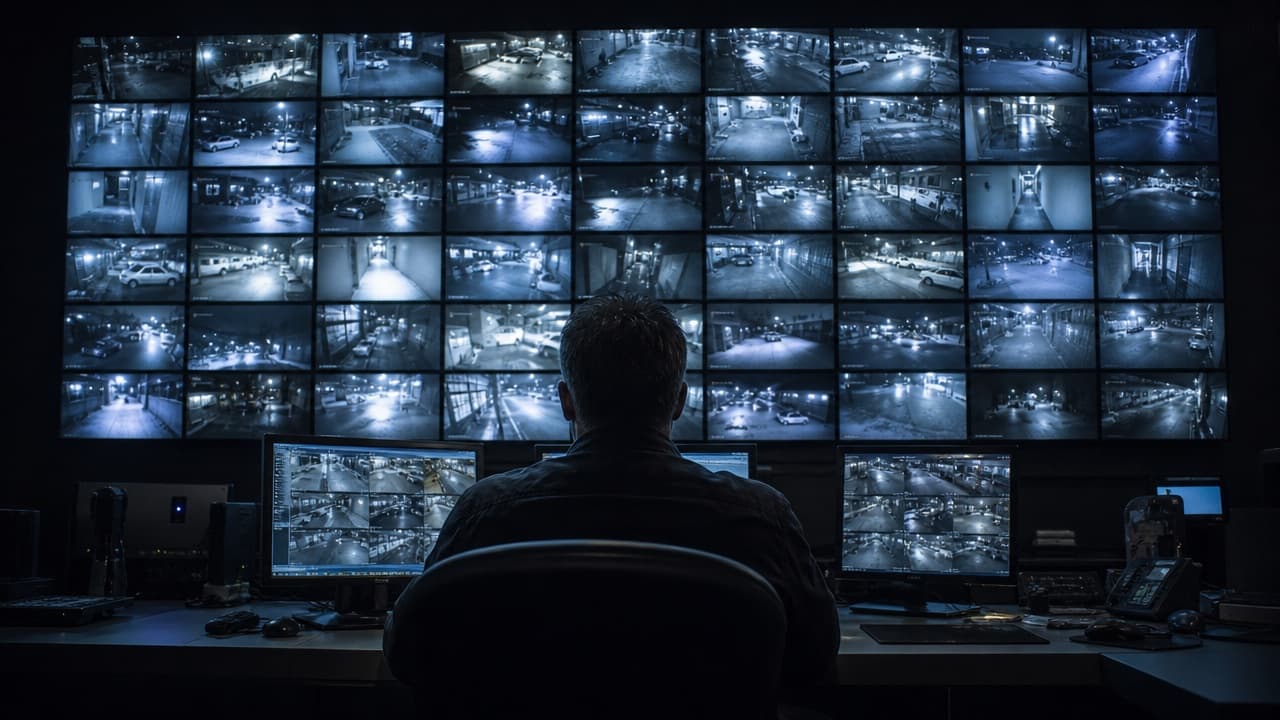
TL;DR: Physical security monitoring centers plateau around 30–50 clients per operator — not because they lack cameras or staff, but because human attention is the true bottleneck. AI agents that handle the detection-to-triage layer allow a single operator to cover 5–10× more clients without sacrificing response quality. The limit shifts from attention to judgment.
Every security monitoring center owner hits the same wall. Business is growing, they're signing new clients, and then — nothing. Adding another operator barely moves the needle. Signing more clients without adding headcount degrades response quality. The economics never quite work out, and the growth ceiling feels permanent.
It isn't. But understanding why it exists is the first step to breaking through it.
Why Does a Monitoring Center Plateau?
The conventional explanation is staffing. Hire more operators, cover more clients. In theory, growth is linear.
In practice, the ceiling is cognitive, not headcount-based.
A trained operator can hold 25–35 client locations in their active attention at once — not because of some arbitrary rule, but because that's roughly the boundary of effective situational awareness for a human brain managing live camera feeds. Beyond that number, coverage degrades in ways that are hard to see until an incident reveals them: slower response times, missed events during high-alert periods, and the insidious growth of alert fatigue as operators cope with volume.
The traditional fix — hire another operator — doubles the payroll line without addressing the underlying architecture. You now have two operators each managing 25–35 clients instead of one managing 50. You haven't solved the problem; you've just moved the ceiling higher by one headcount unit.
The ceiling persists because the work, in its traditional form, requires continuous human attention at the detection layer. Every movement trigger, every camera motion event, demands an operator's eyes to determine whether it's noise or threat. That's not a training problem. It's a design problem.
What Actually Limits Operator Capacity?
Three things consume an operator's cognitive bandwidth in a traditional monitoring center:
Triage volume. The average 20-camera installation using motion detection generates 800–1,200 events per day. Nearly all of them are irrelevant — shadows, wind, animals, lighting changes. But the operator doesn't know that until they look. Triage is the dominant activity, and it's almost entirely non-value-added.
Context switching. Monitoring multiple client sites means constantly re-establishing context: what's normal for this location? What time is it there? What are the rules for after-hours entry? Humans pay a switching cost every time they shift from one site to another, and that cost compounds across dozens of locations.
Decision pressure under uncertainty. When an alert fires, the operator needs to decide quickly with incomplete information. Is that person supposed to be there? Is that vehicle authorized? The cognitive effort required to make this judgment reliably — without calling in a false dispatch — is significant, and it accumulates over a shift.
All three of these constraints exist at the detection-and-triage layer. An operator who didn't need to spend 70–80% of their time on triage could cover dramatically more clients — because triage is what's consuming the bandwidth.
How AI Agents Change the Constraint
The three-layer approach Closely deploys shifts where human attention enters the workflow.
Layer 1 — Motion trigger: A lightweight process filters raw camera frames. Anything without meaningful movement is discarded. This eliminates a large portion of events before any analysis happens.
Layer 2 — Computer vision: YOLOv8-class object detection classifies what's in the frame: persons, vehicles, animals. Environmental noise — shadows, lighting shifts, insects — is discarded at this stage. The system now knows what is present.
Layer 3 — Contextual reasoning: A vision-capable AI model evaluates the detected objects against per-camera rules configured by the operator in natural language. "Back entrance. No authorized entry after 9pm." "Loading dock. Flag any unattended vehicle present for more than 10 minutes." "Reception. Report any person lingering near the safe room door."
The AI doesn't dispatch. It doesn't close the loop. It does the triage — and it surfaces to the operator only the events that match the rules for that specific camera and site.
The result: instead of 1,000 events per day requiring human review, an operator sees 10–20 validated alerts with attached video clips. Each alert arrives with context: which camera, which rule it matched, a timestamp, and the clip. The operator makes a judgment call in under 10 seconds and moves on.
The AI handles detection and triage. The operator handles judgment and response. The division of labor is what changes the economics.
What Does 5× Capacity Actually Look Like?
The capacity shift isn't theoretical. It follows directly from the triage math.
If an operator currently spends 75% of their cognitive bandwidth on triage — reviewing events that turn out to be irrelevant — and AI handles 90%+ of that triage work, the operator now has 75% of their attention available for judgment tasks. They can manage proportionally more client sites with the same quality of attention.
A realistic deployment scenario: a monitoring center that covers 40 locations per operator today can target 120–200 locations per operator with AI-assisted triage, while improving response time and reducing false dispatches. The 5× figure is conservative. Some operations have seen higher multipliers, depending on how event-heavy their current client mix is.
The key constraint on the upper end isn't the AI — it's maintaining the quality of human judgment as volume increases. Operators still need adequate time to review alerts, make decisions, and document responses. That floor is real. But it's a much higher floor than the current triage-dominated ceiling.
Why Human-in-the-Loop Isn't Optional
There's a version of this story where the AI handles everything — detection, triage, dispatch. No operator in the loop. Fully automated response.
This is the wrong architecture for physical security, for several reasons.
False positives still occur. Even with multi-layer AI filtering, some events that match the rules won't be genuine threats. An operator catching a false positive before dispatch protects the client relationship and the monitoring center's credibility.
Context exists outside the camera. The AI knows what it can see. The operator knows the client called earlier about a scheduled after-hours delivery. Or that there's a power outage affecting the eastern zone. Or that the badge system was down for maintenance. Human context can't be systematically captured — it needs a human to hold it.
Liability and trust. Physical security decisions carry real consequences. Dispatch without human validation creates liability exposure, and clients who understand the stakes demand a human check before first responders are mobilized.
Human-in-the-loop validation isn't a limitation of the AI — it's a design principle that makes the system more trustworthy, not less capable.
The Competitive Implications
The economics of AI-assisted monitoring favor centers that adopt early and aggressively.
If your current pricing assumes one operator per X clients, and a competitor can achieve five times the client coverage per operator with comparable (or better) response quality, they have two options: undercut your pricing, or pocket the margin difference. Either way, the competitive dynamic shifts.
This is already happening in Colombia and across Latin America, where the monitoring center market is consolidating around operators who can offer enterprise-grade coverage economics at mid-market prices. The structural reason is AI-assisted triage.
Centers that wait for the technology to mature further before adopting are making a bet that their labor cost advantage — if they have one — will outlast the adoption curve. That bet is getting harder to make with each passing quarter.
Frequently Asked Questions
How many clients can one operator realistically manage with AI-assisted monitoring?
The practical range we see in Closely deployments is 100–180 active client sites per operator, compared to the industry baseline of 30–50 without AI triage. The exact number depends on the alert density of the client mix — a portfolio of high-traffic retail sites generates more events than the same number of office buildings. With AI handling detection and triage, the binding constraint becomes the operator's judgment capacity, not their attention span.
Does AI triage introduce new risks — events it misses that an operator would have caught?
Every detection system makes tradeoffs between false positives and false negatives. AI computer vision tuned for physical security catches a broader class of genuine events than motion detection, while dramatically reducing the noise that causes operators to disengage. The risk of an operator missing a real event due to alert fatigue — which is a documented consequence of high false-positive environments — is often higher than the miss rate of a well-configured AI system.
Can an existing monitoring center adopt this without replacing their NVR infrastructure?
Closely integrates with existing NVR systems from Dahua, Hikvision, Milestone, and any RTSP-compatible hardware. Installation does not require replacing cameras or recabling. Per-camera rules are configured through the Closely platform by the operator — no programming or model training required. A typical deployment of 20–30 cameras is operational within a few days.
Is the AI dispatch-capable, or does a human always authorize response?
Human authorization is always required before dispatch in Closely's architecture. The AI surfaces a validated alert — with video clip, matched rule, and timestamp — and the operator makes the dispatch decision. This is a deliberate design choice, not a technical limitation, and it's what allows the system to be trusted in live security operations.
The Bottom Line
The growth ceiling most monitoring centers hit isn't a staffing problem or a technology problem in isolation. It's an architecture problem: the detection-and-triage layer is consuming the human attention that should be reserved for judgment and response.
AI agents don't replace operators. They reassign where operators spend their time — moving them from the bottom of the intelligence stack (reviewing irrelevant events) to the top (making decisions on validated threats).
The monitoring centers that crack the growth ceiling are the ones that make this architectural shift before it becomes a competitive necessity. The window for early-mover advantage is still open — but it's narrowing.