Security Cameras Connected to the Police in Colombia: Why Almost No One Has Them and What AI Can Do
Only a small share of shops have cameras connected to the police. How Bogotá's C4 link works and how AI helps send verified alerts instead of noise.
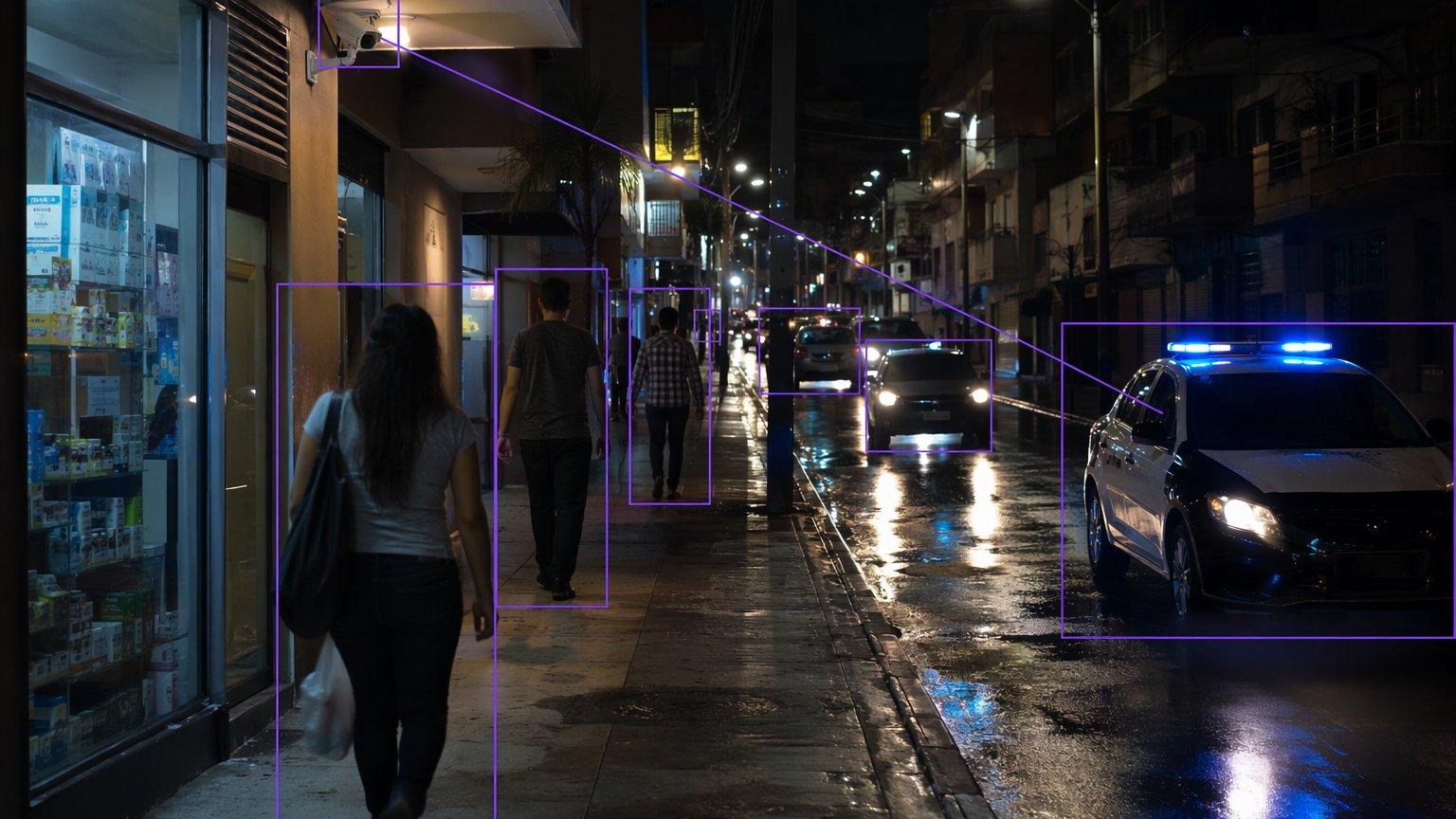
You have cameras in your shop. They're recording right now. But if someone forces your door at 2 a.m. tomorrow, who finds out? If the answer is "me, when I review the footage the next day," then you have an archive, not a security system.
That gap is more common than it looks. A survey by Fenalco Bogotá-Cundinamarca found that only about 6% of commercial establishments had cameras connected to the police, and Bancolombia's business blog, citing that figure among surveyed merchants, puts it at 6.4%. The measurement dates from early 2024 and covers Bogotá, so read it as a signal, not a current national number. Still, the signal is clear: most shops record, but they don't alert anyone.
In this article I'll explain why that happens, how connecting cameras to the police works in Bogotá, and how you can use AI so that security cameras for shops produce verified alerts instead of noise. If you want to see the AI part in action, try Closely on your current cameras.
Why Almost No One Has Cameras Connected to the Police
According to press coverage of that same Fenalco survey, a significant share of merchants also don't know the mechanisms for coordinating with the police in their area. In other words, a lot of the problem is awareness. But there are practical reasons too:
- They don't know it's possible. Many merchants assume private cameras and the police live in separate worlds.
- It looks like paperwork. There are technical requirements and forms, and nobody wants to lose a week on that.
- Privacy worries them. That's a legitimate concern; we'll cover it below.
- They fear false alarms. If your connected system pings for everything, nobody will take it seriously. This is the most important technical reason.
How the Connection to Bogotá's C4 Works
In Bogotá, the Mayor's Office and the District Security Secretariat have publicly invited residential complexes, shops and malls to connect their cameras to the C4, the Command, Control, Communications and Computing Center. According to the tally published by the Mayor's Office, the system brings together around 13,000 public and private cameras.
There's a legal basis: a Bogotá City Council agreement, enacted in 2021, sets out how to link private security cameras to the Metropolitan Police's C4 while protecting people's privacy. In practice, the calls have set minimum technical requirements for cameras, such as image quality and resolution.
Two honest warnings:
- Requirements change. Don't treat this article as official guidance: before starting, confirm the current process and requirements directly with Bogotá's District Security Secretariat.
- Outside Bogotá it's different. Each city has its own mechanisms (security fronts, support networks, municipal platforms). Ask your local police station or city hall.
You can also complement the connection with simpler tools. Bancolombia's own blog recommends combining cameras with remote monitoring, alerts and daily routines, plus SOS buttons and signage that deters offenders.
Connecting the Camera Isn't the Same as Responding
Here's the point almost nobody makes: the police being able to see your camera doesn't mean someone is watching it. A city with thousands of cameras can't have an operator on each one. The connection gives access; the response depends on someone receiving a notice that makes sense.
That's why verified alerts are the missing link. A verified alert has already passed through filters (is it a real person? is it a restricted zone? is it an unexpected hour?) and through an operator's eyes before anyone calls the police. When the notice arrives clean, the responder knows what's happening and can act fast. When it arrives dirty, it gets ignored.
How AI Helps You Get Verified Alerts
Most conventional motion systems fire alerts for shadows, insects or light changes. We talk about that problem in our article on AI motion detection and false alarms. Well-applied AI changes things in three steps:
- It detects what's relevant. It tells people and vehicles apart from environmental noise.
- It filters by context. It uses the rules you define: schedule, zone, behavior.
- It goes through a human. The operator validates before dispatching.
That's how Closely works. It runs on your existing cameras (through RTSP/ONVIF or the NVR), with no proprietary hardware. Its Watcher agent detects in real time, and multi-layer filters cut false alarms by up to 88%. Rules are written in plain language, for example "alert me if there's a person inside the shop after 10 p.m." And because Closely keeps a human in the loop, the operator validates before dispatch. You can explore the full system at closely.dev.
For shops without night staff, there's also the Gatekeeper agent, which manages visitors and access and notifies by WhatsApp and phone call. One point of transparency: Closely does not replace the official connection with the police; what it does is make sure that when you or your monitoring center call the emergency line, you do it with reliable information. If you manage several locations, a single operator can supervise up to 100 sites.
A 5-Step Plan for Shops
- Review your cameras. Image quality, coverage of entrances, register and stockroom.
- Learn the local mechanism. In Bogotá, the Security Secretariat; elsewhere, your police station or security front.
- Decide who receives the alert. A name and a number, not "whoever is around."
- Put AI to work filtering. So that what arrives is real. Ask for a free 2-week demo and measure how many useful alerts you get.
- Write a short protocol. What to do on an alert, who to call and what evidence to keep.
Privacy: What You Need to Watch
Connecting cameras doesn't exempt you from personal data law. You must post notice that video surveillance is in use, limit who can access the footage and not use it for anything other than security. We explain more in Law 1581 and AI video in Colombia. This is not legal advice; for your case, talk to a lawyer.
Frequently Asked Questions About Cameras Connected to the Police
1. Can I connect my business cameras to the police in Colombia?
In Bogotá there is an official mechanism to connect private cameras to the C4. In other cities it depends on local programs; ask your city hall or police station.
2. What technical requirements do cameras need for Bogotá's C4?
The calls have set minimum image-quality and resolution requirements, and they can change. Ask the District Security Secretariat for the current list.
3. Can the police see my cameras all the time?
A 2021 Bogotá City Council agreement regulates linking private cameras with the C4 while guaranteeing people's privacy. Ask for the terms of use in writing before connecting.
4. How many shops have cameras connected to the police?
A Fenalco Bogotá-Cundinamarca survey cited by Bancolombia put it at 6.4% of surveyed merchants. It's a 2024 measurement from Bogotá.
5. Does connecting my cameras guarantee the police will come?
No. The connection gives access to the images, but the response depends on someone receiving and validating the alert.
6. What is a verified alert?
A notice that has already passed AI filters and an operator's review before emergency services are called.
7. How do I keep my system from sending false alarms?
Use video analytics with layered filters, set rules by zone and schedule, and let a human validate before dispatch.
8. Does Closely connect directly to the police?
No. Closely delivers verified alerts to you or your monitoring center, who are the ones who contact the authorities.
9. Do I need to replace my cameras to use Closely?
No. It works on existing cameras through RTSP/ONVIF or NVR, including Hikvision, Dahua, Axis, Bosch or Reolink.
10. Can I try Closely before paying?
Yes. Closely offers a free 2-week demo on your current cameras.
Conclusion
Having cameras is the first step; having someone react in time is what actually protects you. If you want your cameras to stop being an archive and become a system that tells you what matters, request your free demo at closely.dev.